
Argwings Kodhek
The Maumau Lawyer

Early Life and Education.
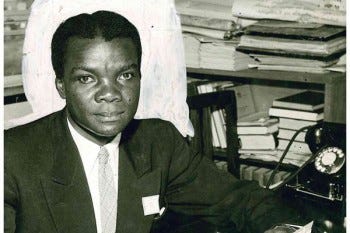
Chiedo Argwings Kodhek was born in 1923 to an influential Luo clan in Gem, Siaya County. Brilliant from a young age, he attended a missionary school then joined St. Mary’s Yala then St. Mary Kisubi college. Like many future African leaders, he found a spot in Makerere University. Here, he was able to interact and exchange ideas with like-minded Africans especially regarding the political state of the continent at the time.
He returned to Kenya and took up a teaching job in Kapsabet boys alongside Daniel Moi. In 1947, an opportunity to travel abroad opened up. Kodhek qualified for a government scholarship to study social science in the University of Cardiff. Though this was a good opportunity, he had a burning desire to study and practice law. This led him to terminate his scholarship after one year. With the blessing and financial support of his parents, Argwings began pursuing law in the University of St. Andrews.
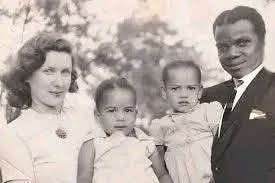
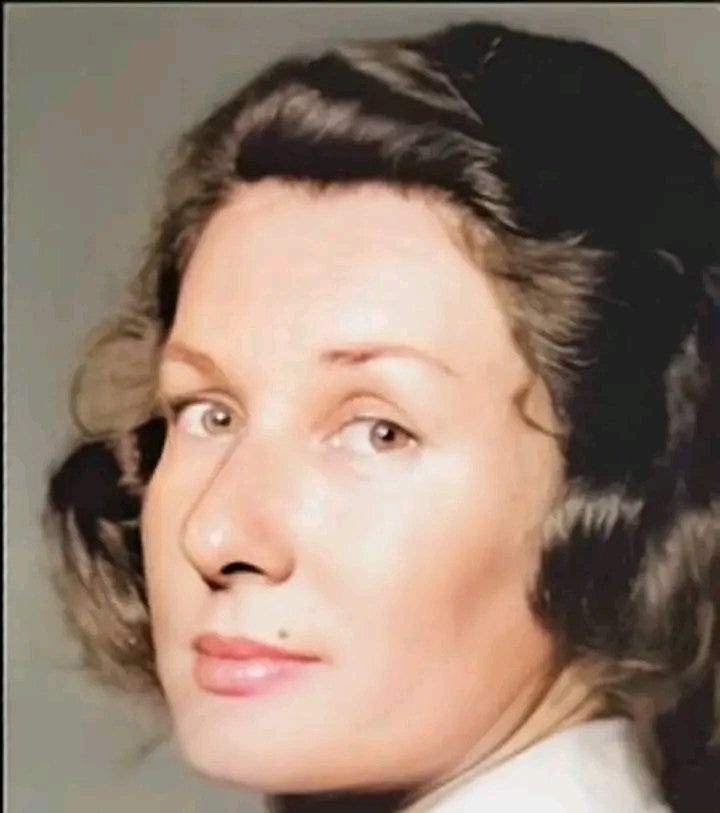
In 1951, just as the politics of protest were heating up in Kenya, Argwings Kodhek graduated and was admitted to the Lincoln’s Inn in Central London. This was unprecedented for an African at the time. The temptation was to stay in London and he had even secured a well paying job and an Irish wife named Mavis Tate. He was Regardless, just before the state of emergency was declared in 1952, Argwings Kodhek returned to the country with his wife.
The Maumau Lawyer
Trying to change the system from the inside, Argwings was offered a job at the Attorney General’s office. Here’s the problem: his salary was a third of his white counterparts’. Kodhek rejected the offer and delved headfirst into private practice.
Even settling down was a problem at first. Colonial laws banned mixed-race marriages as part of the ongoing policy of racial segregation. Kodhek successfully battled it in court though. Secondly, though they could afford it, the neighborhoods of Karen, Lavington, Westlands and Muthaiga were off limits for Africans. On the other hand, his wife, could not be allowed to live in Kaloleni. They settled at Ruaraka after a long battle with the colonial government both he and his wife fought.
The Kenya African Union (KAU) members who were now being constantly dogged by the Special Branch of police who had just been empowered to arrest them under any flimsy excuse would be his first clients. The real test for Kodhek however, was coming in the form of the bloodiest episode of the Maumau war- The Lari Massacre.
The infamous bloodletting was immediately followed by a contermassacre, mass arrests and a media coup in quick succession. Githunguri Teacher’s Training college was turned into a detention camp, complete with a courthouse and a gallows. Argwings Kodhek was part of the defense team which also included A.R Kapilla, Ajeet Singh and Fitz de Souza. Needless to say, most of their clients were innocent and had been selected at random. Further, their property had been confiscated meaning they wouldn’t be able to pay the lawyer fees.
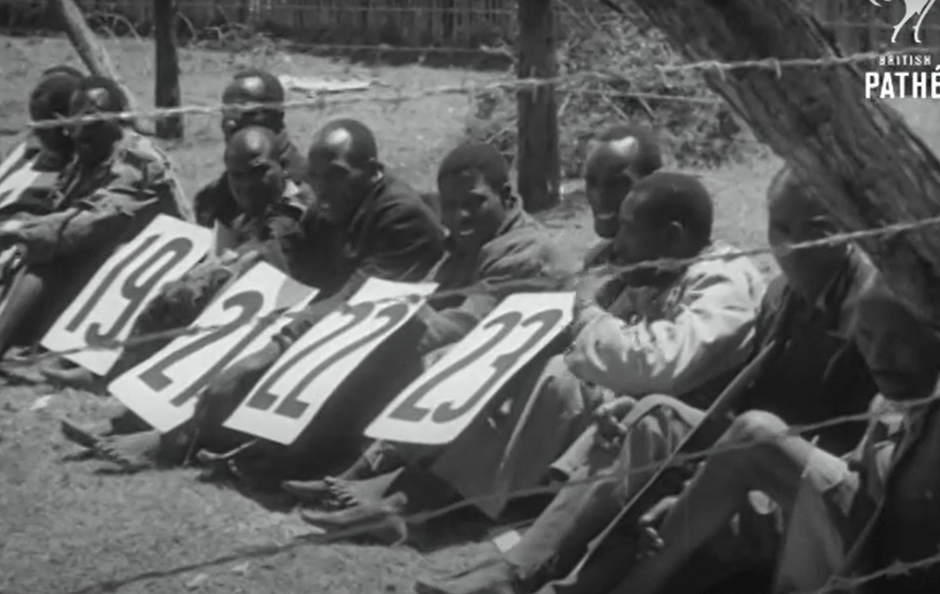
At the risk to his own life, Argwings Kodhek took up the cases pro bono and the colonial government made him suffer at every point. As an African, he needed a pass to go anywhere affected by the emergency. This system caused him mistreatment as the police officers frustrated his attempts to represent his clients. At various checkpoints along the way to Lari, police officers would keep him for unnecessarily long periods of time before letting him proceed. In some instances they would disregard his pass document though it was signed by the Registrar. In one such, occasion he was arrested, taken to Uplands Police Station and fined 50 shillings.
Regardless of these challenges, he still secured 48 acquittals for Lari suspects. He showed an intimate understanding of the law and argued his points eloquently. He also served as Waruru Kanja’s lawyer saving him from being convicted for a capital offense. Waruru would later serve as an MP and a Cabinet Minister.
Kodhek’s vigor and readiness to represent Maumau suspects most of whom could not pay him earned him the nickname ‘the Maumau lawyer’.
He also used his global connections to alert journalists about the Hola Massacre as well as the haphazard coverup by the British Government. This was the event that effectively began the march towards independence.
Politics
The Lyttleton Constitution of 1954 provided for elections in which Africans could vote an African representative for each of the 8 Provinces. Between 25 September and 2 October 1956 Kenyans elected the leaders that would represent them in the legislative council. Argwings Kodhek formed the Nairobi African District Congress to run for the Nairobi seat. Despite ramping up a lot support, he lost to Tom Mboya’s Nairobi People’s Convention.
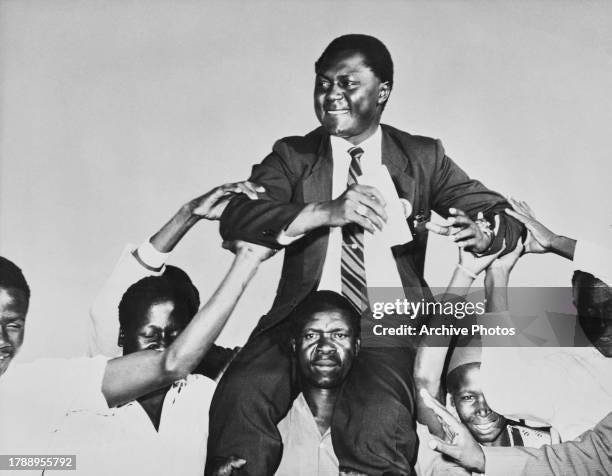
He focused on his law firm which he opened in 1957 and ended up helping a lot of Africans. In the Lancaster House Conference, Argwings was one of KANU’s legal minds. He also shifted his gears to regional politics, stepping away from the urban scene as independence drew nigh. Together with Masinde Muliro, Lawrence Oguda and Oginga Odinga, he ensured close correspondence with the grassroots level so as to take the grievances directly from the source and regularly update the people about their progress especially in the Nyanza Region
Upon the attainment of independence, he was passed up for the Attorney General job. Charles Njonjo got that. Argwings won the Parliamentary seat for Gem, his home constituency. He also served as Parliamentary Secretary to Ministry of Health and Housing and Assistant Minister, Ministry of Internal Security and Defence from 1964. He later became Minister of Natural Resources in 1966. In all these posts he would serve with vigor and class.
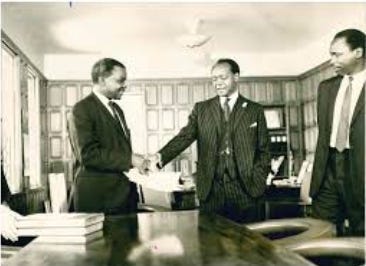
Argwings divorced his first wife Mavis Tate in 1960 and married Joan Omondo.
Death
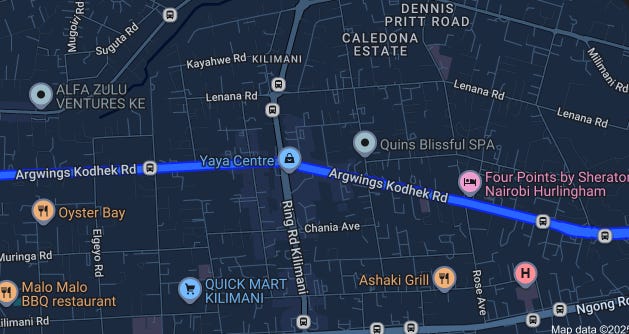
He was Minister of Foreign Affairs in January 1969 when he died in a mysterious car accident in Hurlingham as he was driving to his home in Kilimani. The death is suspicious for two reasons.
The political climate of that year was extremely tense as Kenyatta purged the leadership of Luo membership. This was coming after the soiling of Kenyatta’s relationship with Oginga Odinga which you can read all about here. Luos in parastatals and those holding government offices were not spared either.
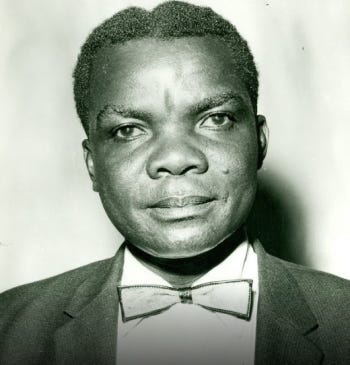
Secondly, his leaked autopsy revealed that he had died of bullet wounds. The immediate uproar was immediately suppressed. The message that was announced from Sauti ya Mkenya was that he died in a car crash that caused his car to roll off the road.
It is important to note that, in the consequent by-election in Gem, Tom Mboya did not lift a finger to aid KANU in the campaign. It was Professor Mungai, Kenyatta’s close ally who ran the campaign. Tom Mboya had completely fallen out with the Kikuyu faction of KANU. It would only be a few months before his own assassination on that July afternoon. Later, in October of that same year, the Kisumu Massacre would mark the beginning of a wide tribal chasm that inevitably led to the 2007-2008 post election violence. The succession of these events casts further aspersion on the events of his death.
He was survived by his wife and children. Of her husband’s death, Joan Kodhek defiantly said, “The scar of losing my husband, the father of our six children, continues to heal. However, the magnitude of the loss to me, coupled with the circumstances of the same, are a pain that will never leave me.”
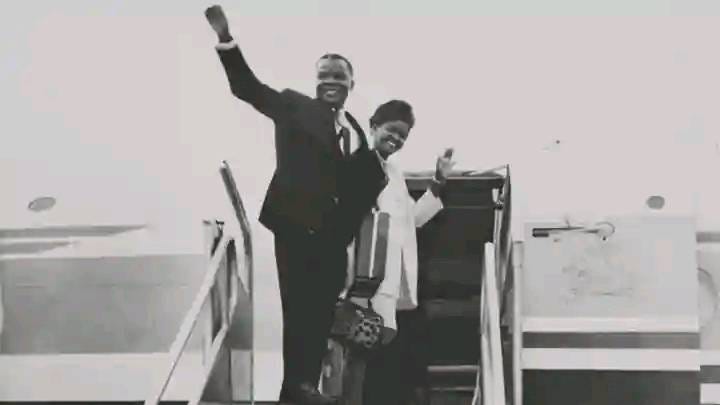
The road he died on was named Argwings Kodhek Road in his honour. A hollow act by the same person who was responsible for his death. To keep his legacy alive, the next time you’re heading to Kilimani, or are stuck in traffic at the choked-up Hurlingham Roundabout, remember this great man.
If you enjoyed or learnt something from this piece please consider subscribing and pledging an amount. I also accept direct donations gratefully through this link.
I love seeing this at the end of every piece haha
-Source? -It was revealed to me by my ancestors
I thoroughly enjoyed this! I now have a visceral need to know the history behind all the roads in Nairobi