
Clitoridectomy Crisis
The Female Circumcision Controversy (1920-1930)

Life in traditional African tribes, was marked in stages. Each passage was celebrated with a ceremony. Initiation, in particular, was one of the most important is it marked the entry into adulthood. Boys could now join the army while girls were eligible for marriage. Each tribe had different ceremonies and accompanying physical symbols that marked this passage. Conflict was inevitable during the early days colonial rule as the British government faced off with the natives on the issue of female circumcision- which they deemed barbaric.
As we shall soon see, while this may seem like an easy solve, there was far more at stake. In the early twentieth century, Europe was conducting a direct onslaught on African tribal identity with colonization as the disguise and Christianity as the vehicle. This issue of female circumcision was an opportunity for Africans to fight back at the colonial government but the sensitivity of the matter made each event controversial and it was only a matter of time before it devolved into crisis. Women were not only participants in this war, their bodies became the arena on which these ideological battles were fought.
Female Circumcision
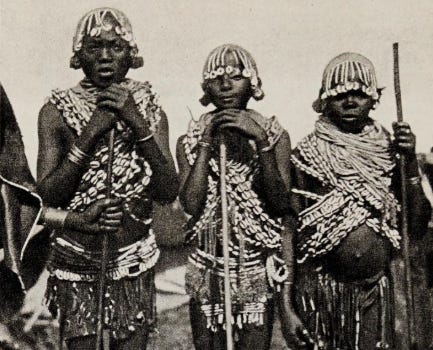
Not all tribes in the colony practiced circumcision. Even less circumcised their girls. According to African Womanhood in Colonial Kenya, by Professor Tabitha Kanogo, the Kikuyu, Embu, Meru, Kamba, Nandi, Kipsigis and Okiek all practiced female circumcision. It was a cornerstone aspect of their culture. Due to regional marginalization however, this conflict mostly played out amongst the Kikuyu, Meru and Embu tribes with the Kamba being used by the colonial government as counterbalances.
The colonial government boiling down the rite to its physical aspects shows a deliberate ignorance to African social organization. In the case of the Kikuyu for instance, the circumcision or irua was preceded by a series of protocols known as mambura. The initiate had to have an older sponsor who had undergone the rite to help her through the journey. It involved instructions on the tribe’s expectation on the girl and how she was expected to carry herself henceforth. Religious ceremonies including blessings of protection from Murungu and blessings of fertility from the elders were also undertaken. There would even be a diet change to prepare the body for the impending loss of blood.
At its very core, the rite was a purification process. It not only tied the member into the tribe, the initiate formally joined an age group. By reciting the tribal oath or muma wa anake, the initiate was reborn as a member of the tribe ready to carry responsibility. On a deeper level, tribes who practiced the rite on both genders believed it had an impact on fertility. Indeed, the Kikuyu and Nandi attributed their population and high fertility to the custom. The custom separated them from the Kavirondo (or Kapkirondo) who were not circumcised. A derogatory term that was adapted by the British for communities like the Luo or Luhya who did not practice the rite.
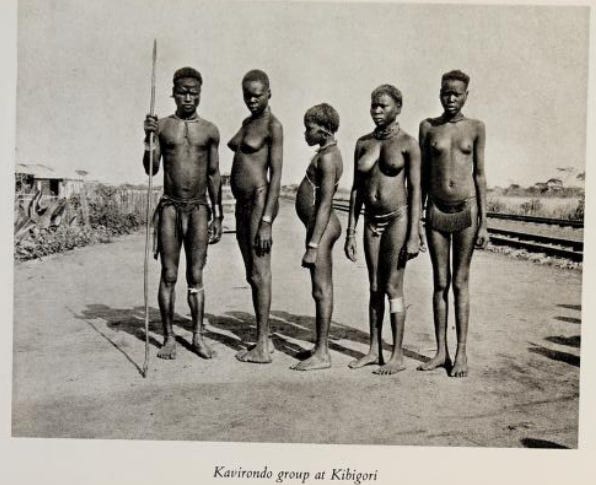
Therefore, when the British started meddling in this precious aspect of tradition, all while conducting a greedy land-heist, Africans took it as an attack to their very existence.
Septic Situation
It all started in 1906 when a girl who had undergone the rite a few weeks earlier was rushed to the Church of Scotland Mission in Thogoto. the wound had gone septic and she was in great pain. Missionaries reported this matter to the colonial authorities while voicing their complete disapproval of the custom.
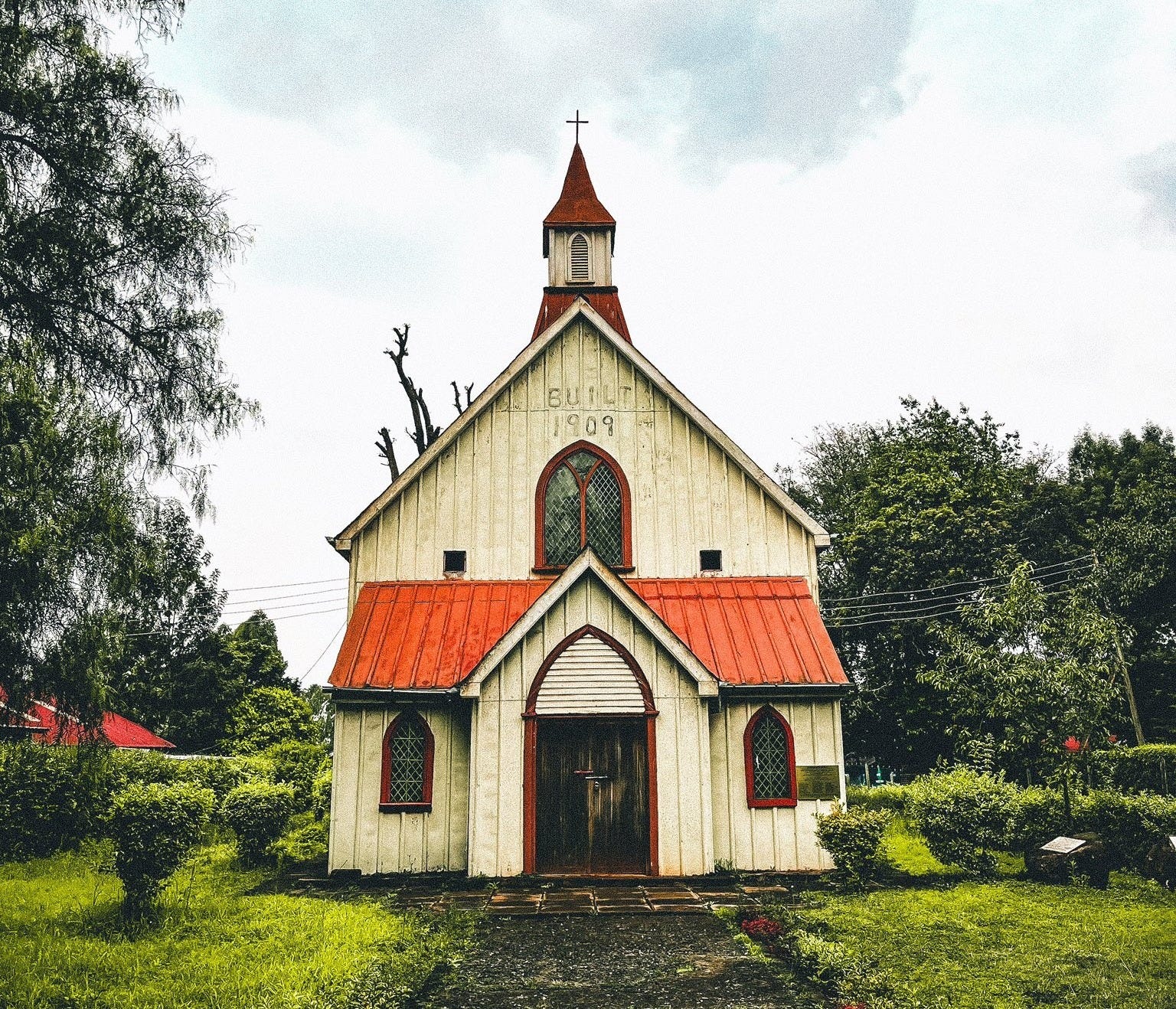
Deep concern turned to direct intervention, in 1916 when the Scottish mission under Dr. Arthur forbade church members from participating in the rite. Finally, in 1922, at a meeting attended by Protestant missions including the Church Missionary Society, African Inland Mission, Gospel Missionary Society and of course, the Church of Scotland Mission; the Alliance of Protestant Churches was formed. Protestants Churches stood in solidarity calling for a complete halt to the custom.
This had an immediate and acute effect on the African converts, an effect that reverberated to the entire Kikuyu tribe. Agnes Wairimu Hinga is a case study Professor Tabitha Kanogo uses to illustrate the dilemmas that surrounded this conflict. In 1926, Agnes Wairimu, who was a baptized Christian girl, accompanied her mother on an early morning errand. On the way, they met a group of girls in the initiation procession to the river. She knew some of the girls and Professor Kanogo even posits that she must have known they had been preparing for the ceremony.
She felt a deep urge to join the procession. Agnes changed routes and joined the girls. This was an erratic decision considering she had not participated in any of the mambura ceremonies leading up to circumcision. As soon as the initiation began, her infiltration was discovered as she did not have a sponsor (Mutiiri), but upon realizing this, one of the women present volunteered. The surgery itself was successful but a sudden reckoning was about to hit Agnes.
First, she fell out with her Protestant brother who was obviously against the custom by this time. When the school she attended heard about what she had done, she was immediately expelled. Even closer to home, her maternal family, who were for the custom were extremely enraged. She had undertaken the rite without the endorsement of her uncle or his wife. This was unheard of and unacceptable. Her violation of protocol became her social undoing. It was a damned if I do, damned if I don’t kind of scenario.
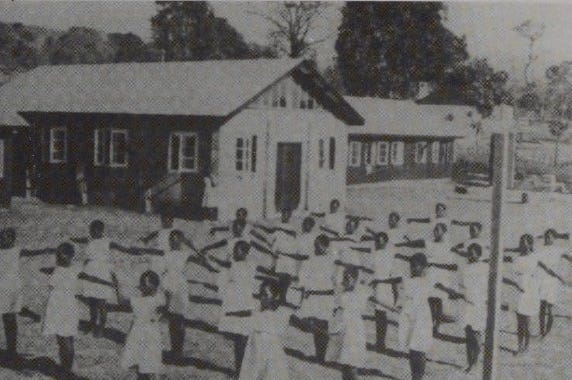
Agnes underwent the rite to join the tribal ingroup but the socio-political climate at the time, made it difficult to do so. It was impossible for her to navigate these moral quandaries without falling out with at least one party. In her case unfortunately, there was no good outcome. Even her friends in the Protestant church isolated themselves from her at the instructions of the ‘women of faith’ within. Professor Kanogo explains that when one choosing a side they risked ‘social death’ either with the tribe or the mission.
Karing’a vs Kirore
By 1929, female circumcision became the focal point of missionary activities. The Protestant Church now took a hardline stand against clitoridectomy once and for all. They repudiated all students and even members of staff who supported the custom. The church even sought to make it illegal by law through the Local Native Councils (LNC). The fallout from this was astronomical. Africans could not understand why a cultural matter was becoming such a non-negotiable red flag. The Church of Scotland Mission lost over 90% of its membership and staff as a result.
Africans left to start their own independent churches and schools which were devoid of mission interference. They were culturally pure ie. karing’a. On the other hand, those who remained and supported the mission-work had to swear an oath condeming the custom completely. They also had to sign a sheet of paper confirming the same. Since most of them were illiterate, a thumbprint sufficed. This led them to be referred to as kirore.
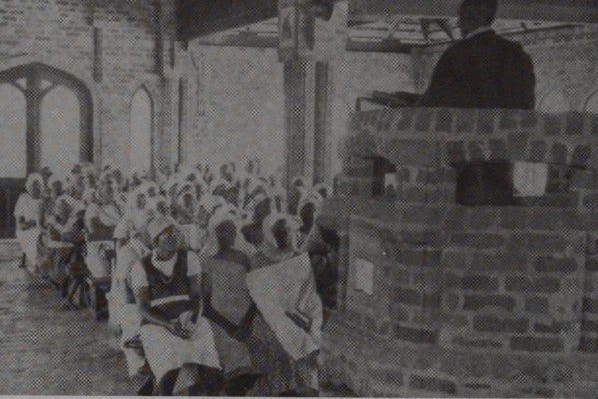
A denomination war going on at this time allowed some Africans to slip through the cracks. While the Protestant church was entirely against clitoridectomy, the Catholic and Methodist missions not only supported it, they recognized its cultural significance. Infact, the Catholic Church catered for the fees and accommodation for their poorer members who underwent the rite. They benefitted greatly as there was an influx of ‘converts’ after the Protestant’s banned the custom in 1929. Agnes Wairimu for instance, got readmitted to a Catholic mission immediately after she was expelled.
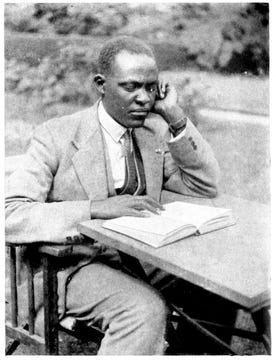
The Kikuyu Central Association, led by the likes of Jomo Kenyatta, Parmenas Mockerie and Mbiyu Koinange seized the opportunity to form the Kikuyu Independent Schools Association (KISA) and the Kikuyu Karinga Schools Association (KKSA) under the leadership of Jomo Kenyatta, Mbiyu Koinange and Parmenas Mockerie. Meanwhile, a rival political party, the Kikuyu Progressive Party, which was obviously incepted at the pleasure of the British, expressed their resistance to this ‘old barbarous, evil custom’.
This issue was yet another example of the European mind critically misunderstanding the African woman. The government tried micromanaging women’s lives to try and guide them to civilization but this was unsuccessful. The missionaries as well as the KPP in a letter to the East African Standard asserted that the welfare of women is a good measure of a nation’s civilization. This mentality gave the government, church and converts leeway to meddle in such matters, and meddle they did…
Medicalization and Interference.
There were two major forms of clitoridectomy being practiced at this point and for the sake of understanding this conflict properly, we are going to analyze them both. There was the minor surgery that involved only the excision of the clitoris. Then there was the major surgery, where the clitoris as well as the labia majora were excised.
In a bid to come to a compromise, the government in tandem with Protestant Churches, agreed that they would allow the minor form but completely banned the latter as it was more likely to turn septic. Another potential compromise was suggested. Girls should undergo the rite at a young age and if possible, during infancy. This reveals a complete misunderstanding of the significance of the ritual. At infancy, it would be impossible to coach the child on the customs of the tribe.
This level of micromanaging reveals a disgusting ignorance by the (mostly male) colonial government and is what Sara Boulanger calls ‘the manipulation and nationalization of the female body in A Puppet on a String. And it was just about to get worse.
To ensure that only the minor surgery was undertaken, two measures would be put in place. First of all, chiefs and headMEN were called upon to sit in on these procedures. The absurdity of this cannot be understated. A man playing a role in any part of the female irua was unheard of in Kikuyu culture and was considered a taboo. Further, the level of intrusion required to ‘inspect’ the nature of the surgery was extremely obscene- an invention of the missionary mind of Dr. Arthur.
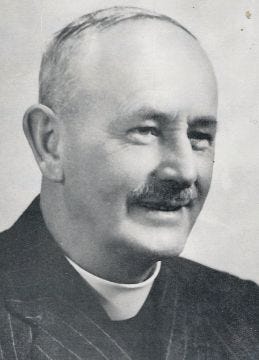
Secondly, the government suggested training the women on the minor form of surgery after which they would be awarded certificates clearing them as licensed individuals who had the government mandate of performing the rite. This failed before it even rolled out. It was deeply condescending for the government to think they could ‘train’ African women on such matters. As one colonial administrator noted on his annual report, Kikuyu women knew more about the anatomy of a female body than the church thought. They refused to be lectured on such matters by an institution that did not respect their pre-existing knowledge on the workings of such matters.
Victims or Villains?
Women did not take this lying down. Their resistance put the government in a difficult position as it was hard to present the women were the victims while still labelling them as the perpetrators. The suggestion of the minor surgery was met with punitive resistance as described in African Womanhood in Colonial Kenya:
One such inspection in Kimani wa Njama’s location in Fort Hall revealed that the operator ‘had in no way abated the severity of the operation’.” In April 1929, the DC for Fort Hall reported: ‘I sent a representative to witness a ceremony that took place yesterday, and he assures me that the operation was carried out exactly in the same way as formerly, and that when he remonstrated with the operator, both she and the girls on whom the operation was being performed resented any interference therewith.”
The regional marginalization in the country at the time also showed an acute hypocrisy in the intentions of the government. Women from the Central tribes could not understand why the rite was being opposed so strictly in the Native Reserves. Meanwhile, clitoridectomy was still being practiced without a hitch in Kipsigis and Nandi. Indeed, it was common for girls to escape to their relatives in the White Highlands or in Forest Reserves where they would undergo the rite and recuperate. To the colonial government and the church, all of this represented the savage workings of the mind of indigenous Africans who desperately needed civilization.
Notes on Traditional Kikuyu Music

Like every other ethnic tribe in Kenya, the Kikuyu were a very musical people. Throughout one’s lifecycle, people watched and participated in various dances with each dance serving a purpose or marking an event. Homesteads were built with large courtyards to be considered as arenas for these dances. Large fields (
Kikuyu women took things up a notch by composing the infamous muthiringu song. In Notes on Traditional Kikuyu Music and Dance, we looked at the role music played in ensuring the solidarity of the tribe and this was the case for this tune. Muthiringu’s lyrics not only praised clitoridectomy, it ridiculed those who had distanced themselves from it.
Chiefs and headmen were not spared. The song comically broke down their recent activities, taunting them for doing the white man’s dirty work. The effectiveness of this medley cannot be understated as it attracted the attention of the then governor, Edward Grigg. Grigg addressed it in a baraza held at Kiambu in February 1930. He denounced the KCA for the use of that derogatory song and empowered the chiefs and native headmen to punish dissidence wherever it arose.
Turning Point
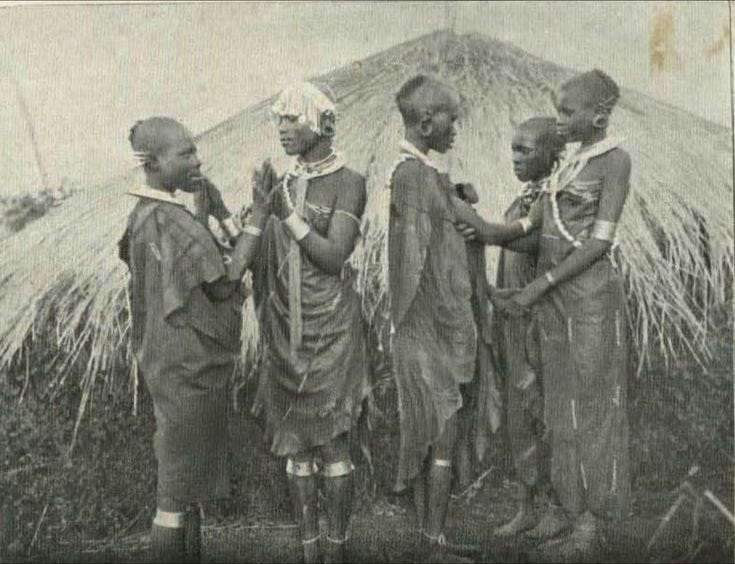
The Clitoridectomy Crisis was a turning point in African womanhood as it is not only the colonial government that women pushed back against. During this crisis, we see more women acting independently, refusing to conform to the expectations projected on them by the elders in the tribe. Many of them escaped to mission centers from whence they charted their own paths in this new world. This was a bold step towards women’s independence and dare I say, the birth of East African feminism.

Unfortunately, there was also a deep fallout here as well. In African society, women were the glue of ethnicity and the bearers of tribal identity. We mentioned this briefly in Traditional Kikuyu Concept of Wealth. As more and more girls joined the mission stations, elders considered it the erosion of tribal esteem, and they were not wrong. Meanwhile, some children of African converts escaped to their conservative relatives to secretly undergo the rite like in Agnes Wairimu’s example. This is the sort of conflict that played out in Ngugi wa Thiong’o’s The River Between.
This redefinition of African womanhood was a slap in the face to the elders. The schism separated African households as father rose against son and daughters fought with their mothers. In the mission stations for instance, a lady would meet a young man whom she wanted to marry but due to his poor background could not afford the dowry. Father’s would be chagrined by this as daughters were essentially a source of wealth. The father would forbid the wedding from taking place by withholding his blessing. Dowry, was not a prerequisite of Christian weddings however, and the missionaries were more than happy to join the two in holy matrimony regardless.
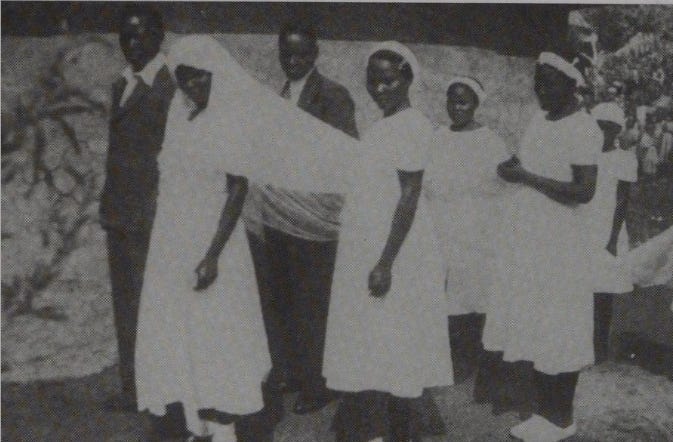
Indeed, this was a major event in the process of cultural dilution as it even seeped into land tenure and inheritance. In the example above for instance, when land was being divided, a son who had aligned himself to the kirore faction, had absolved himself of any claim to his father’s land and property.
Final Showdown
At first, the colonial government was reluctant to implement any draconian laws that wouldcost them an immediate revolution. Local authorities advised the Colonial Secretary to treat the matter with the sensitivity it deserves. That is why the crisis was being ruled over by the Local Native Councils. They had been very unsuccessful thus far as the fines they imposed and the short sentences did little to inspire native cooperation. All that caution and sensitivity was thrown to the wind after a horrid event that took place at the start of 1930.
The African Inland Mission station in Kijabe was the site of a night attack. Here is an account of what happened:
On the night of 1st January 1930 a seventy year old American missionary, Hulda Stumpf, irascible but holding no special brief for Dr Arthur’s views, was preparing for bed when an intruder broke in. Her body was found the following morning. She had been circumcised, and, it was alleged, raped. In fact later investigation showed no evidence of rape, or even attempted rape, though the government deemed it politically expedient to put this out as the crime committed, rather than circumcision. She was already partially undressed at the time her attacker entered through the window, and she undoubtedly suffered a brutal death. The pillow used to suffocate her - before the operation on her clitoris and labia was performed - was pressed down with sufficient force to break her nose. Nothing was stolen, and there was no vandalism.
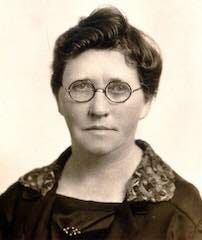
There was nothing random or senseless about this crime. it was clearly a message to the colonial government. Not only was there no theft or vandalism, the operation the missionary suffered was the kind that the Protestant Churches had protested against-the major surgery. The colonial government and the Alliance of Protestant Churches led by Dr. Arthur were livid. Edward Grigg rained down threats, promises of investigation and heavy reparations for those who were found culpable. As an ode to his incompetence, no one was ever tried for his crime.
Henceforth, stricter measures were put in place to rid Africans of the custom. The diplomatic approach of compromises was scrapped. Now Africans would have to contend with criminal sentences, heavy fines and long stretches in jail. An overzealous member of the LegCo. even suggested the death penalty for those found carrying out clitoridectomy. This happened even in Kamba land where the minor form of the surgery had successfully replaced the more dangerous one.
The church doubled down on the campaign and it was here that the term ‘Female Genital Mutilation’ was coined. As Britain tightened its grip on the colony, previously inaccessible areas now faced the full force of the law. It was now possible for the government to implement this policy across all tribes in the colony. Kalenjin tribes in Elgeyo Marakwet and the Meru subtribes in Mt. Kenya East had it the worst as hundreds of their women were arrested, tried and found guilty in the 1930-1945 period.
By the 1940s, the aftermath of the conflict was still reverberating across, especially in the Central region. Though the rite was done away with, the erosion of African culture that came as a result was plain as day. Especially as Christians presented their religion as a safe alternative to African tradition. The schism created became the fronts from which the Maumau fought was fought from 1952. Ultimately, the African woman slowly began to forge her own path away from the burden of tribal identity and the expectations of Christian missionaries.
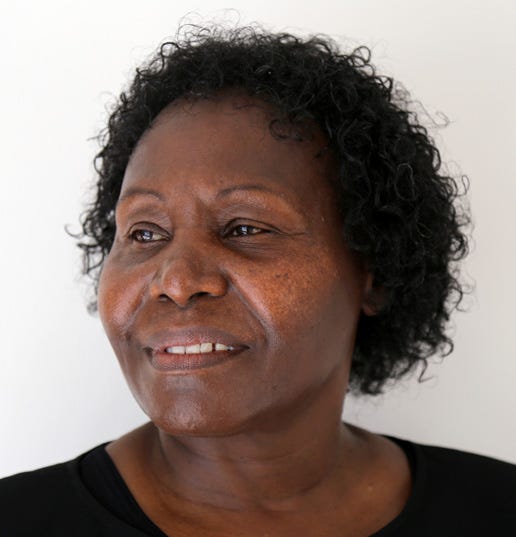
Special thanks to Professor Tabitha Kanogo. Her book, African Womanhood in Colonial Kenya, was an eye-opening read that was thoroughly researched and lent a female perspective to a matter that was always presided over by male opinions from the likes of Dr. Arthur. Other titles by her include Squatters and the Roots of Maumau, and Wangari Maathai. Another work, Endangered Childhood and Youth: Precolonial, Colonial and Postcolonial Perspectives, is nearing completion.
If you enjoyed or learnt something from this piece please consider subscribing and pledging an amount. I also accept direct donations gratefully through this link.
One thing must kill a 'woman'
Let me 'leave' with my clit intact!
This is the perfect "the world did not begin when you were born" Continue in your pursuit of knowledge brother, and keep educating us. I love this.