
Colonisers' Favourite Local
is a bank today.

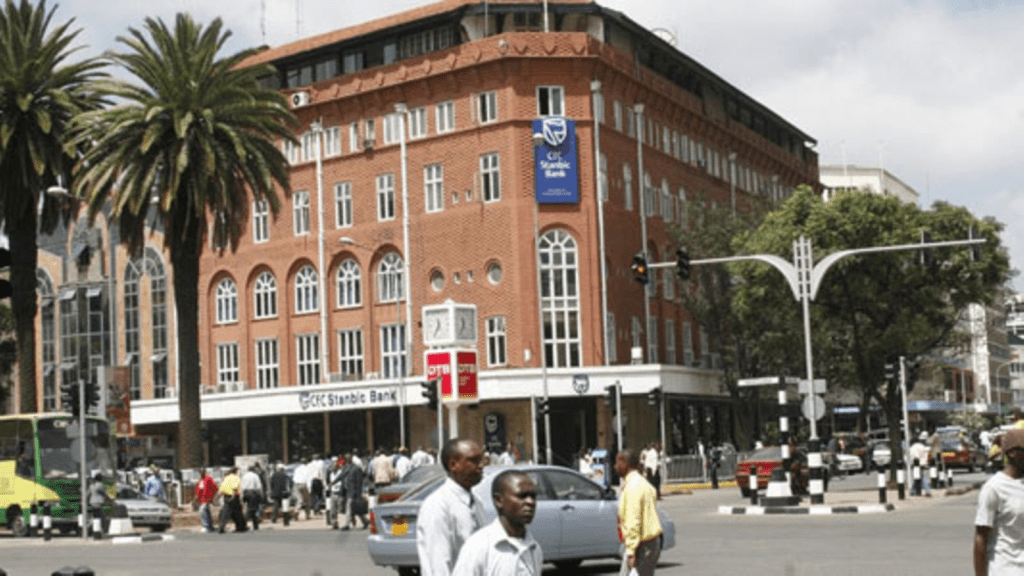
You’ve seen that redbrick building at the junction of Kimathi Street and Kenyatta Avenue. It hosts Stanbic Bank today, but even to the untrained eye, it stands out like a sore thumb. Have you ever asked yourself what lore it holds? What about other buildings in Nairobi with a similar aura?
Grogan Lore
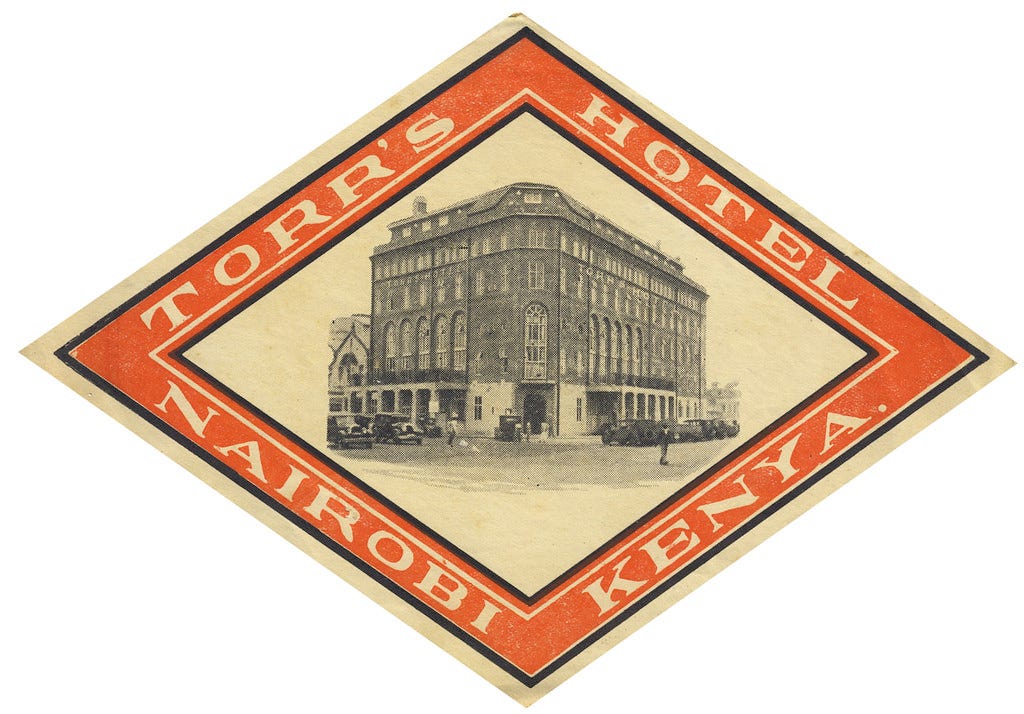
Stanbic Building used to be Torr’s Hotel. It was constructed by the infamous British settler named Ewart Grogan and opened for business in 1929. Grogan was no ordinary settler. He first came to Africa as a young man and trekked from Cape Town to Cairo to impress the father of the girl he wanted to marry. Arriving in Cairo in 1900 to everyone’s surprise, the father had no option but to led his daughter, Getrude to get married to this young man. Getrude’s Hospital in Nairobi was constructed as yet another token of love after her death.
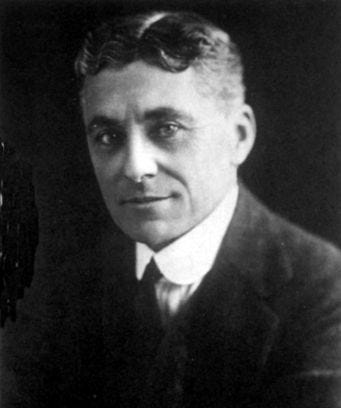
After settling in South Africa, Grogan was one of the first Britons to move to the new East African Protectorate. He pitched a tent at the confluence of the Nairobi and Kuruchwa Rivers, naming the area Chiromo after a confluence he had passed by in his travels. An old building called Chiromo House, which is still standing in Nairobi University’s Chiromo Campus, is the house he constructed to live in and is believed to be the first stone structure in Nairobi.
The man was an entrepreneur. He dipped his fingers into almost everything. As Nairobi took shape, he sensed the value of the hotel business and decided to invest. He constructed the storied red-brick Torr’s Hotel. The building was across from the New Stanley Hotel, a deliberate choice. It was built in a Tudor Revival architectural style to evoke nostalgia from the settlers in Nairobi. It was the first building in Nairobi to boast an elevator, as it was the tallest building upon its construction. Truly, no expense was spared.
Clientelle
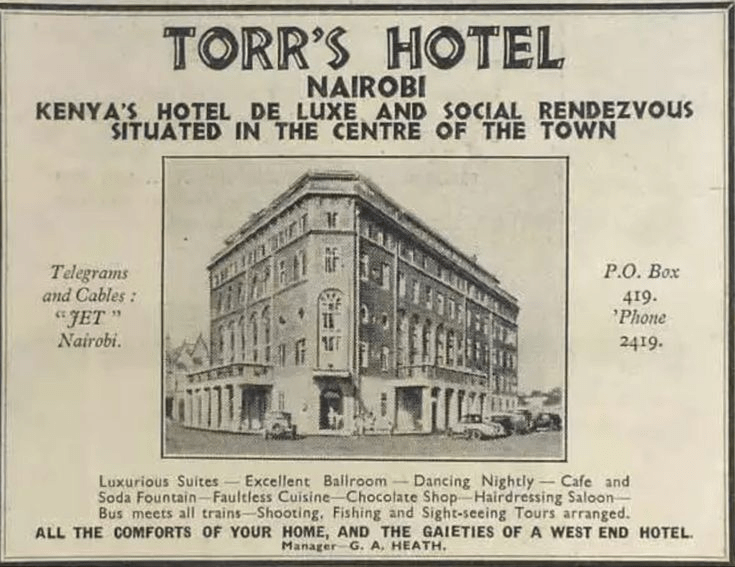
Savvy readers are familiar with just how ill-mannered colonial settlers were. We saw some samples in the Happy Valley Set and Karen Murder Mystery Articles. I’ll have you know that Grogan named the place after its manager Joseph Torr because he knew full well the sort of activities that would be taking place within. Grogan had deliberately created the new hotspot for drink and debauchery in the colony, and it was right at the heart of the new city.
The first thing that set Torr’s hotel apart was its clientele. In The Happy Valley, we discussed that Muthaiga Country Club was patronized mostly by upcountry settlers and aristocrats. Similarly, the New Stanley Hotel was favoured by travellers and government employees working on Government Road (today’s Moi Avenue). Each club had its own clientele- all except Torr’s Hotel.
The Happy Valley Set

The civilisation introduced to colonised territories is used as a justification for the heinous deeds that allowed such forms of government to exist and prosper. As if the colonial missions were driven by charity, not an insatiable greed for wealth, territory, and to infect native populations with Western culture and language. Let’s face it, colonisation was all about profit. Infrastructural investments like railways, roads and schools were calculated risks that were not really about bringing civilisation to ‘the dark continent’ but to ensure maximal exploitation of Africa’s resources.
Torr’s catered to the soldiers, farmers, civil servants, tourists, royals, lawyers and everything in between. It offered world-class cuisine in its dining room on the upper floors. It also offered accommodation for those who needed a place to stay over. Torr’s most precious attraction, however, was the lounge on the first floor. It was a socialization hotspot. Here, settlers could drink themselves silly, right up until the morning.
Harlotry Headquarters
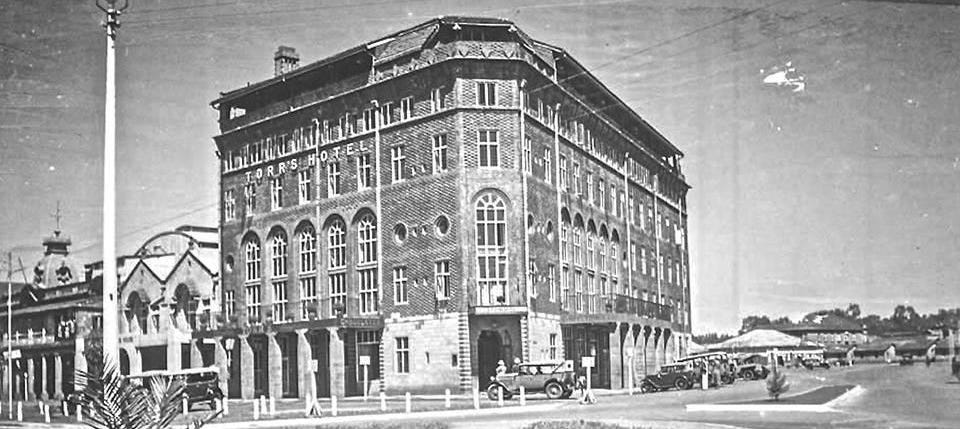
Understand this: there were strict rules governing the opening and closing time of clubs in the colony. Yes, NACADA is a colonial legacy institution. Regardless, Torr’s would be open well past the stipulated 2 am, well into the morning. The hotel received special treatment because senior members of the police force were patrons. No one batted an eyelid when it stayed open because the policemen were passed out face down in the ballroom, then having a walk of shame at 6 am, headed back to Kingsway Police Station (Central Police).
Revellers would spew out of the doors recklessly in the middle of the night, pouring out into the heavy traffic at the junction of Hardinge Street (Kimathi Street) and Sixth Avenue (Kenyatta Avenue). Indeed, the incompetence of the police became blatant when the junction was marked as a black spot for that very reason. Many drunk settlers were knocked down dead by speeding vehicles, while drunk drivers leaving the establishment barely made it out of the city before ramming into buildings, poles, trees, etc. The problem was partially remedied when empty petrol drums were planted to slow down traffic.
As we’ve already established, Torr’s was the final location on a typical night out. After all the other locations had closed down, settlers filed into the establishment to dance the night away. Even in Karen Murder Mystery, Diana Broughton and Joss Errol left Muthaiga Country Club for Torr’s as the night waned to enjoy a bit of dancing. If the Earl knew that would be his last night on earth, I wonder if he would have spent it differently.
The Karen Murder Mystery.

On the morning of 24th January 1941, at the junction of Karen and Ngong Roads, a Buick was discovered having veered off the road. The dairy worker who found it was horrified when he looked inside. Suspended in a weird angle in the driver’s seat was the body of the Earl of Errol, Josslyn Hay. He was dead with a bullet hole in his neck. The hue and cry we…
There is one passage from Christopher Hiscox’s The Dawn’s Stand To: The Life of Peter Mills that perfectly captures the craze of Torr’s Hotel:
…just about sundown as we were stirring from a drunken doze (at the military barracks) an African orderly dashed out with an urgent message… it appeared that Mike Bradley’s girlfriend… had been spotted on a balcony high up on the Torr’s. She was half-naked and to the consternation of passers-by, was threatening to throw herself off… we dressed quickly and dashed into Nairobi and, sure enough, there she was teetering on a high ledge. It seemed that the cause of her distress was that Mike had jilted her the night before. Mike took one look at her, fled straight up the stairs and suddenly appeared at a window alongside the ledge…
Nobody knows what Mike said, but after what seemed like an age, she relented and crawled back in through the window!
New Ownership
Like all clubs in Nairobi to this day, the spotlight eventually shifted from Torr’s to fresher establishments like the Clairmont House, built by J.A Hunter which could be considered some sort of hidden gem. Further, the writings on the wall revealed that the days of the colony were ending. Ewart Grogan, being the stubborn racist that he was, could not imagine his hotel being opened to African patrons. He simply could not allow it.
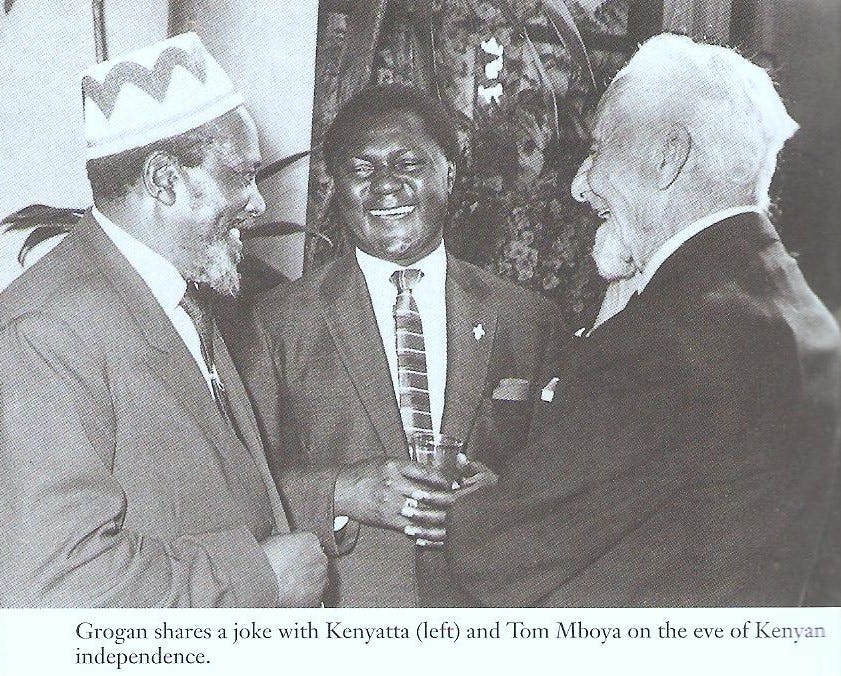
That is why he sold the building to the Ottoman Bank in 1958. Despite having several other active investments in the colony, including a large sisal farm in Taita, Grogan packed his bags and moved to South Africa, where white supremacy would still be maintained for a while under the apartheid system. Soon after, Stanbic took over ownership of the building and it’s been that way to date.
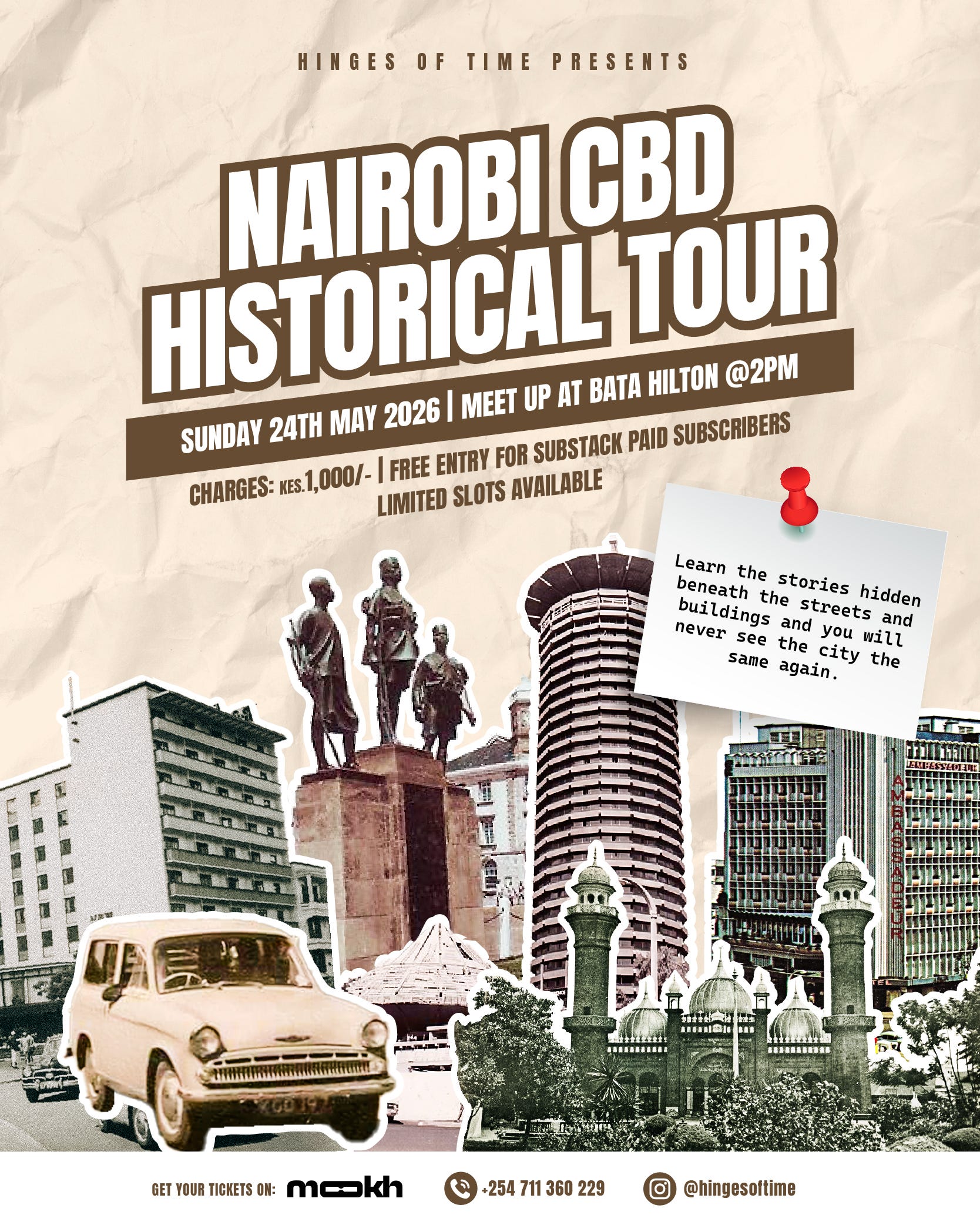
If you enjoyed this story, then you have to come for the Historical Nairobi CBD Guided Tour on 24th May. We will be studying the history of the city, including the street names we’ve mentioned in this article as well as the interesting lore behind Nairobi’s buildings. Its going to be so fun and educational. There are limited slots, so you’d be prudent to book your place early via this link. Like all other Hinges of Time events, free access will be granted to all paid subscribers, so consider upgrading today.
The walking tour seems like it'll be fun! Unfortunately I won't be available that day 😭. Hope you'll hold another edition.