
East Africa is Bleeding
and Kenya is complicit in all of it

One would think that democracy, as a national policy having been introduced post-colonialism, would have properly permeated into the region by now. The leaders who go around during the campaigns promising to do better than their predecessors certainly push this illusion. Democracy in East Africa is just that, an illusion. Bloodshed in the region, from Sudan to Tanzania, with the complacency of the other heads of state is rudely waking us up from this pipe dream.
Lets talk about Sudan first, painful as it is. I understand the country is not really in East Africa; and yet from time immemorial the country’s affairs have had an indelible effect on the region.
Since Sudan gained independence in 1956, the military has been in charge. Leader after leader toppled down by the same military that endorsed him for power. Some only held power for a day before they were deposed or were forced to resign. Several ‘Transitional Military Councils’ have been set up in the past but any accompanying optimism is quickly shattered as the sitting leader chooses to cling to power rather than midwife democratic elections.
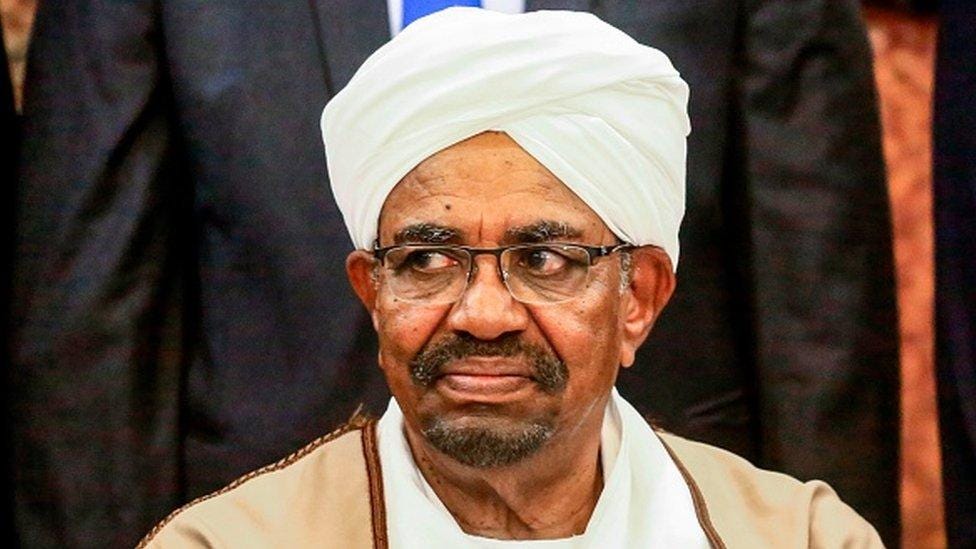
All the while, a bitter civil war in the southern region of the country kept the troops engaged. When Omar Al-Bashir took over power in 1996, he chose to be a bit more shrewd than those who preceded him. After all, it was certainly only a matter of time before someone else deposed him. Just like his peer, Moi, who was still clinging to presidency in Kenya with a death grip in that period, he consolidated power in his hands. He surrounded himself with people he could trust, keeping them just far enough so they couldn’t depose him. He endeared himself to the military assuring them of their superiority as long as he was in power. But that was not all.
The Western Dafur region of Sudan which is rich in gold reserves had been marginalized from time immemorial. The citizens were tired of this and consequently formed rebel groups named Sudan Liberation Movement (SLM) and the Justice and Equality Movement (JEM). Conveniently, the Sudanese Armed Forces (SAF) were almost fully engaged in what would later become South Sudan. The weak garrisons in the Darfur region were attacked and overrun.
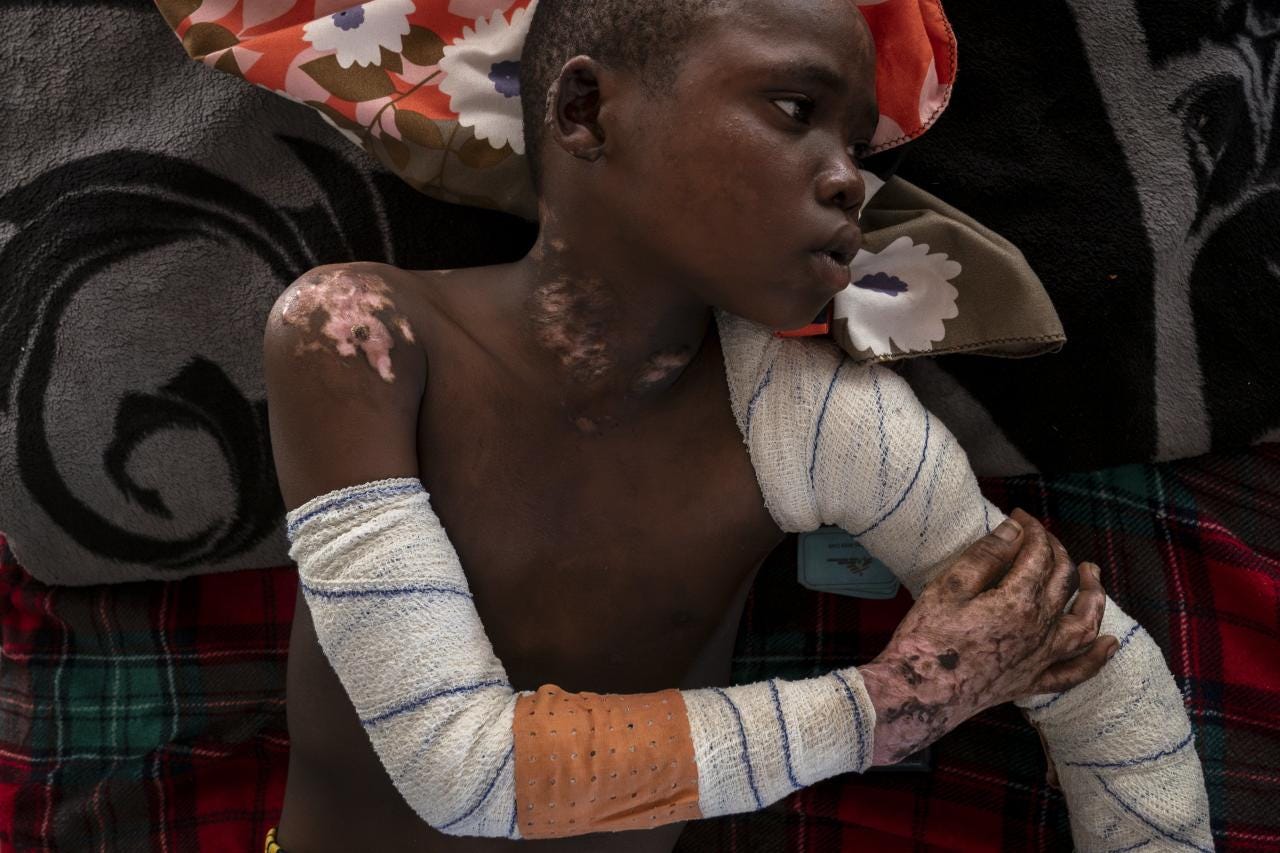
President Omar Al-Bashir had an ace up his sleeve though. He armed and empowered Arab Militias called the Janjaweed to fight for him in the Darfur region. Nicknamed ‘the Land Cruiser War’, this conflict was marked by a disregard for human rights and consecutive massacres stacking up the death toll to the hundred thousands. Mass evictions and displacements devolved into a humanitarian crisis. Indeed tentative peace would not be achieved in the region up to the 2020s.
Meanwhile, under great international pressure, South Sudan gained independence in 2011, leaving Bashir in an uncomfortable position especially economically. You see, most of Sudan’s oil reserves were now in South Sudan. As the economy became worse and unrest mounted, Bashir made a rather desperate move. Mohamed Hamdan Dagolo, known as “Hemedti was his most trusted leader of the Janjaweed militia. Omar Al-Bashir gave the Janjaweed official status registering them as a paramilitary group called the Rapid Support Forces (RSF).
The RSF under Hemedti and the SAF under Abdel Fattah al-Burhan lined their pockets and built up relationships with countries especially in the Middle East and Libya. Indeed, the RSF has acted as an auxiliary force in conflicts in Middle Eastern Countries further augmenting Hemedti’s influence and riches. These conflicts also made sure the RSF soldiers were skilled killers who showed no remorse when it was time to take a life or level a village.
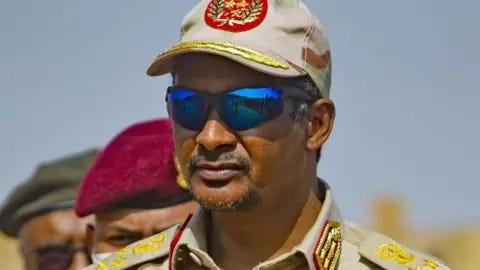
Both Burhan and Hemedti wielded considerable power. This was Bashir’s way of keeping himself protected and yet, his reckoning was fast approaching. The protection Bashir had built around himself was obviously unsustainable. Protests broke out in 2018. Civilians had had enough. While they struggled for basic needs, 60-70% of the national budget was allocated to the security forces. Although the RSF and SAF initially backed Bashir, cracking down on protesters ruthlessly, the civilians did not back down.
Burhan and Hemedti read the writings on the wall. Bashir had used up his usefulness. For all his attempts at endearment, the same security forces he had empowered became his own undoing. Yes, the RSF and SAF conspired to topple Bashir which they did successfully in April 2019 ending Bashir’s 30 year reign. Although his ousting was celebrated countrywide, the Sudanese did not trust the people who were behind it, and with good reason. Both their hands were still slick with blood from the massacres in Darfur.
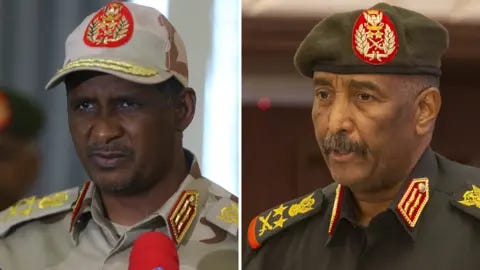
Protests continued throughout the country stalling all progress. The familiar Transitional Council gimmick was negotiated with the collaboration of concerned countries. As the military and civilians agreed to this power sharing deal, Burhan and Hemedti were selected as the chair and vice chair respectively. Civilians saw through this ruse. Another year of unrest necessitated the signing of a second deal. This deal, signed in December 2022 was meant to provide a complete transition of the government into civilian hands by April 2023.
The two leaders conflicted over a cornerstone aspect of the deal. Prudently, it was agreed that the RSF would be absorbed into the SAF. What they did not agree on was the period. While Burhan proposed a 2 year period, Hemedti was more comfortable with 10. This falling out led to the outbreak of vicious fighting in the streets of Khartoum just days before the transition to civilian government was scheduled. The country is now completely war-torn as the RSF directly attacked SAF military installations. They launch drones from an airstrip in Chad constructed with funding from the United Arab Emirates. While the Emirates has received fitting backlash for their involvement in this war, they are not the only complicit country.
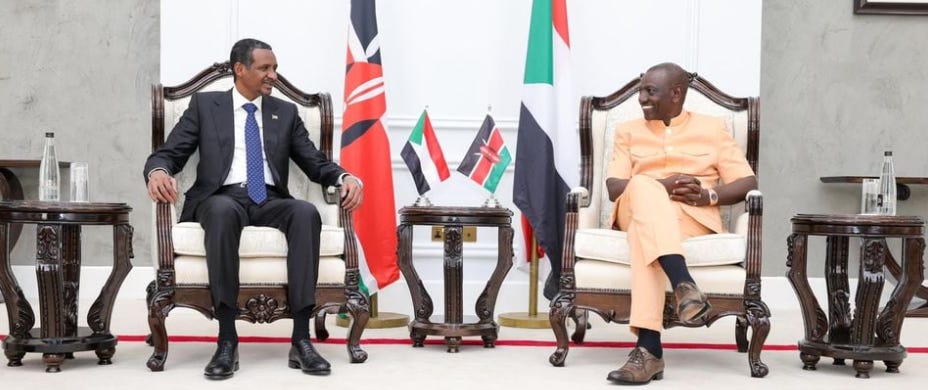
It does not suffice William Ruto to oversee the killings of protesters on the streets of his own country, he is more than willing to participate in the genocide going on elsewhere. In February 2025, Ruto welcomed Hemedti into the country receiving him warmly at State House. As the two mass murderers chatted it up, the international community flagged this visit as Kenya playing a partisan role in the ongoing conflict. The KICC facilities were made available for use by the RSF who launched a parallel government with the inclusion of some civilian groups.
Ruto’s fostering of this rebel group makes him complicit in the genocide currently happening in Sudan; and since we live in a representative democracy, it is safe to assume he was working on behalf of the Kenyan people. One of Ruto’s henchmen, Musalia Mudavadi tried to explain Kenya’s involvement as a step towards peacekeeping. His words have aged horribly as the launch of the parallel government worsened the already volatile situation in Sudan and our endorsement marked us as an enemy.
Martha Karua, speaking in Citizen TV, hypothesized that Ruto’s ties with the RSF may come to be of use to him in the forthcoming election. As we have already seen, the RSF is always more than ready to fight across Sudan’s borders. What is stopping Ruto from deploying them on Nairobi’s streets to force a win in the forthcoming elections? Especially if he borrows a leaf from the tyrant Samia Suluhu in neighboring Tanzania who we will discuss shortly. The ballot that we are trusting in so much to oust Ruto might be of very little consequence in the long run.
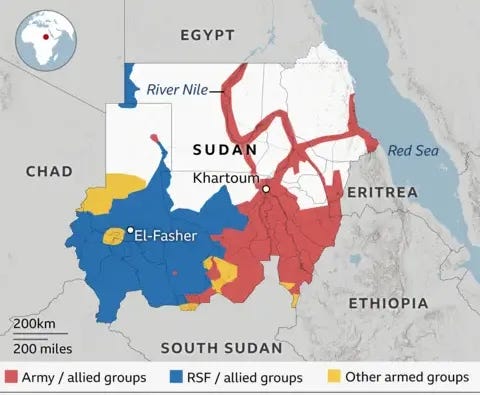
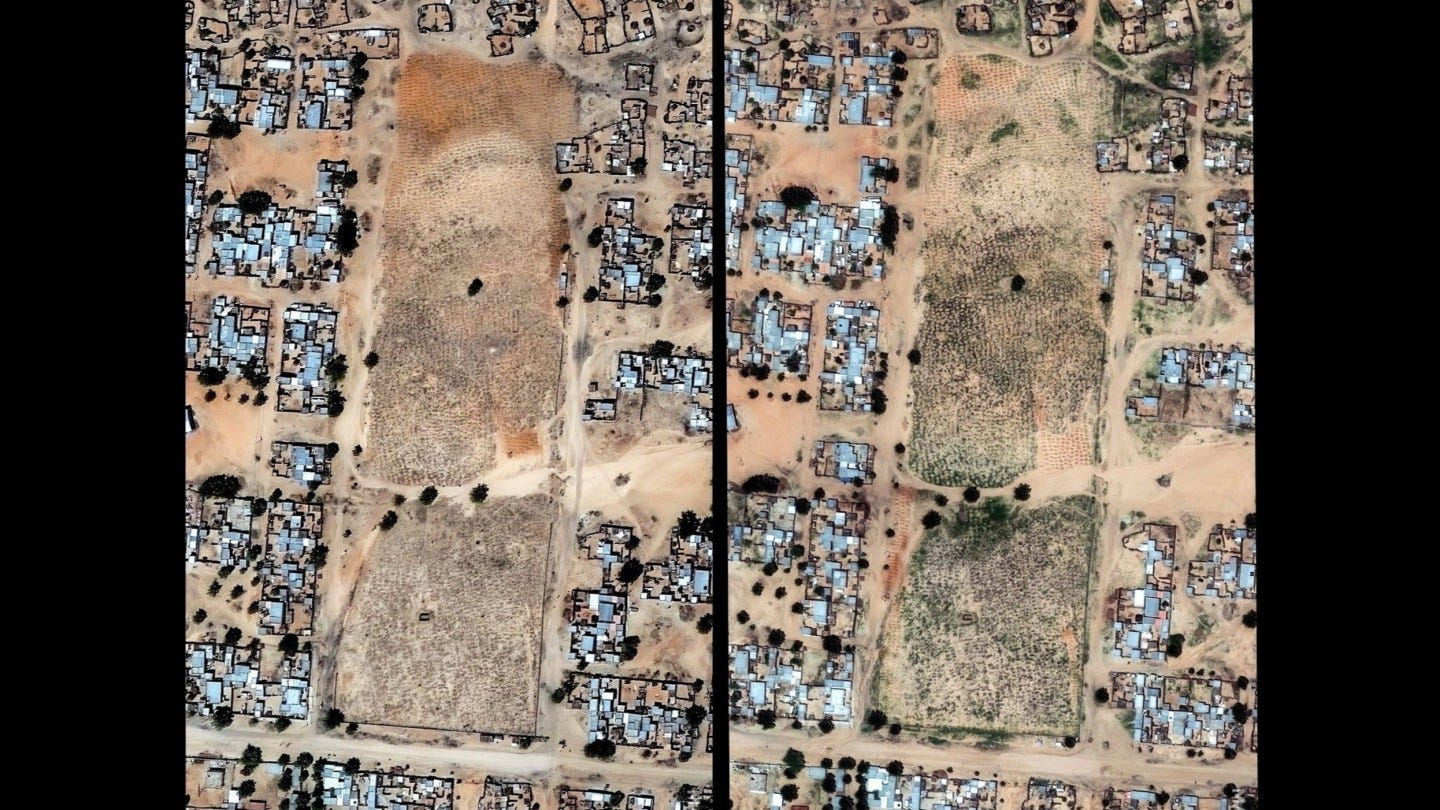
Hemedti’s RSF now controls most of the Western Region of the country. Darfur, which has been his stomping ground for decades now harbors his militia. A dauntless attack on El-Fasher was successful after a long siege but this was more than just a military gain. Thousands of innocent civilians were executed ruthlessly. It is an ode to their impunity that the RSF soldiers captured these atrocities on video and posted them on social media for all to see. Further, Satellite imaging over Al-Fasher captured the bloodied sands, smoldering ruins and mass graves betraying the horrors that took place over the past week. All of this suffering in Sudan and not a sliver of hope in sight for the country. It breaks my heart
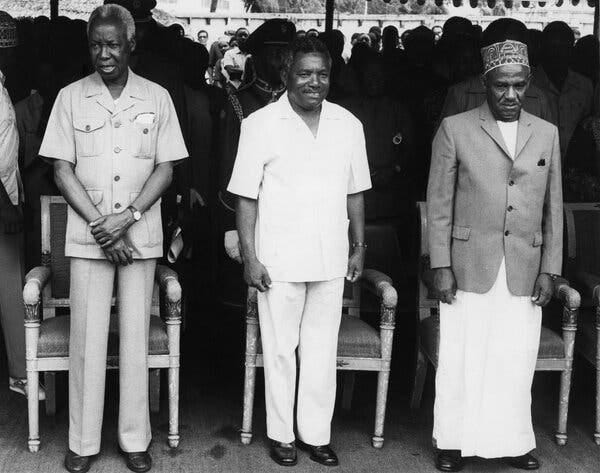
Our neighbor to the south is also going through a painful chapter of her history. As the incumbent president ceaselessly reminds us, Tanzania has maintained a state of relative peace throughout its history. Chama Cha Mapinduzi (CCM) built off Julius Nyerere’s vision of a socialist paradise in East Africa, and the merging of Tanganyika and Zanzibar. Even after Julius Nyerere retired having served 21 years in office, the ruling party’s power did not wane at all. His successor, Ali Hassan Mwinyi took up the reins of power in 1985.
The problem with a single party dominating the politics of a country for decades is, all semblance of accountability disappears altogether. An elaborate system of self-enriching tyrants becomes entrenched into the fiber of the country’s being causing a permanent dent in the country’s economy. While all this transpires, the country maintains an air of stability but this is purely a mirage.
In reality, CCM crushes dissent ruthlessly. A muzzle is placed over the media in the country allowing the ruling government to control the narrative. Puppet political parties are maintained off of CCM’s budget to posturize as competition but they always lose in the polls and don’t even bother campaigning. Meanwhile, opposition leaders who wield real political influence are cracked down and their political parties banned.
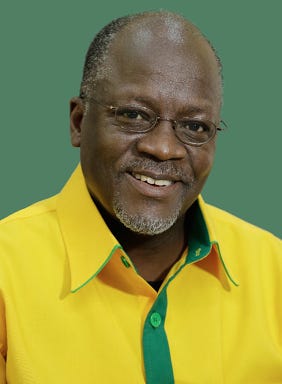
It is this system that John Pombe Magufuli took over in 2015. Unlike previous presidents however, Magufuli genuinely seemed to have Tanzania’s best interests at heart. This manifested itself in the unconventional approach he had towards governance. Magufuli cleared up the bloated, incompetent executive firing thousands of employees sometimes on live television. Spontaneous visits to government offices kept officers on their toes.
Even the international community, who are used to bullying African countries were not spared. Magufuli stood up to the World Bank. That’s something Ruto can only dream about considering his eagerness to pander for the approval and charity of the West. He also negotiated better mining deals that ensured Tanzania benefitted the most from her minerals. International contractors worked under strict timelines and rigid budgets that saw a levelling up of the country’s infrastructure. The country was actually progressing on an acute upward trajectory.
Make no mistake however, Magufuli had his own share of controversy. He continued the trend of muzzling the media for instance. The COVID 19 pandemic which caught the world unawares became his undoing. First he denied the existence of the virus altogether. This consequently led to a spike of infections in the country.
John Pombe Magufuli died under very mysterious circumstances in 2021. He disappeared from the public for 18 days until the government finally declared that he had passed on. While the official records assert he died from a heart disease, it is quite likely that the same COVID he denied took him out. Or maybe it was something more nefarious like an assassination. Well, we’ll never know because the Tanzania government did not allow independent doctors to conduct an autopsy on his body.
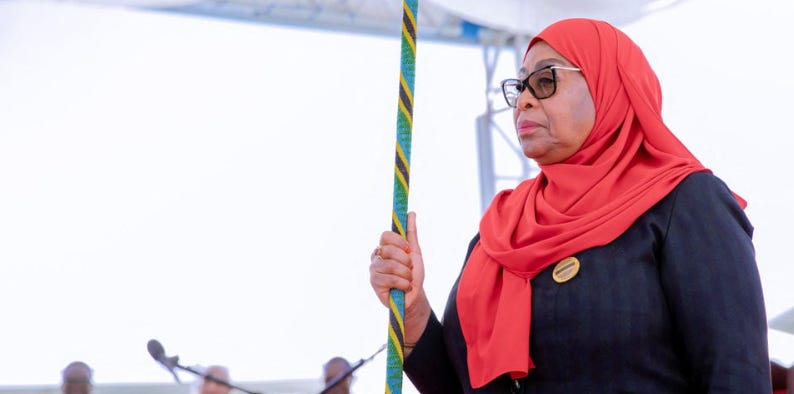
His Vice President, Samia Suluhu took up the reins of power upon his death. Just like the tyrannical Emperor Nero of Rome, Suluhu’s rule started off with hope and positive reforms. THE FIRST FEMALE PRESIDENT IN EAST AFRICA! The news was received worldwide with excitement. It was only a matter of time however, before she turned a sharp tangent and began to undo all the good Magufuli had done. Tanzania soon slid back to the status quo. The leader, whose name posits her as the solution to Tanzania’s difficulties, has proved to be the country’s main problem.
The 2025 elections for Suluhu had very high stakes. She would need to be elected into power as Magufuli’s second term she had inherited had come to an end. Tundu Lissu, the main opposition leader was arrested in April 2025 and charged with treason. Protests sparks by his arrest were crushed by the police while the government banned them altogether infringing on their right to assembly.
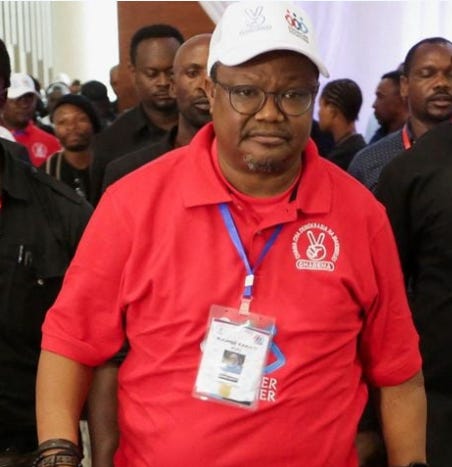
Rather than try him in the courts as an arrested person is expected to be, Tundu’s hearing keeps getting postponed. This reveals the true intention of his ‘arrest’. The Tanzania government just needed him pacified during the campaigns and elections. In a show of regional solidarity, lawyers and activists in East Africa attempted to enter Tanzania to attend a scheduled hearing in May. The lucky ones including Martha Karua and the former Chief Justice Willy Mutunga were turned back at the airport.
For Kenyan activist, Boniface Mwangi and Uganda’s Agather Atuhaire, who successfully gained entry into TZ, things were much worse. The two were arrested by the Tanzanian police and underwent unprintable horrors in the hands of the security forces. Both of them turned up near their respective country borders later nursing injuries of both a physical and psychological nature. The activists were the topic of heated debate in Tanzania’s parliament for almost two weeks straight. One of the Parliamentarians expressed regret that the interferers in Tanzania’s democracy were allowed to return to their countries in one piece. A flaw, she said, that should never be allowed to happen again.
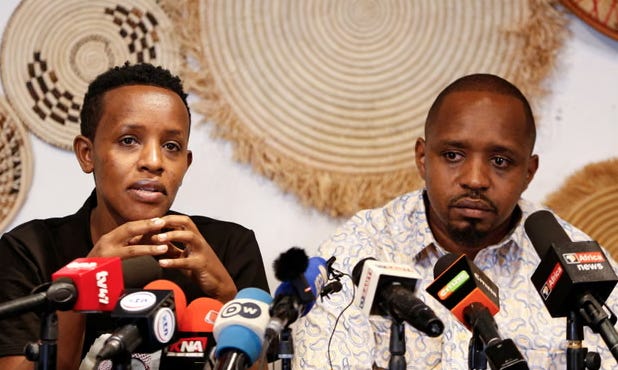
Yoweri Museveni and William Ruto did not in any way demand an explanation for the hostile treatment of their citizens both of whom are protected under the constitution of the East African Community. Ruto probably felt a silent gratitude for the handling of one of his biggest problems (Boniface Mwangi) on his behalf.
Anyway, with the polls fast approaching, and all her credible opponents behind bars, Samia Suluhu braced for certain, comfortable victory. She did not count on the resolve of the Tanzanian people however.
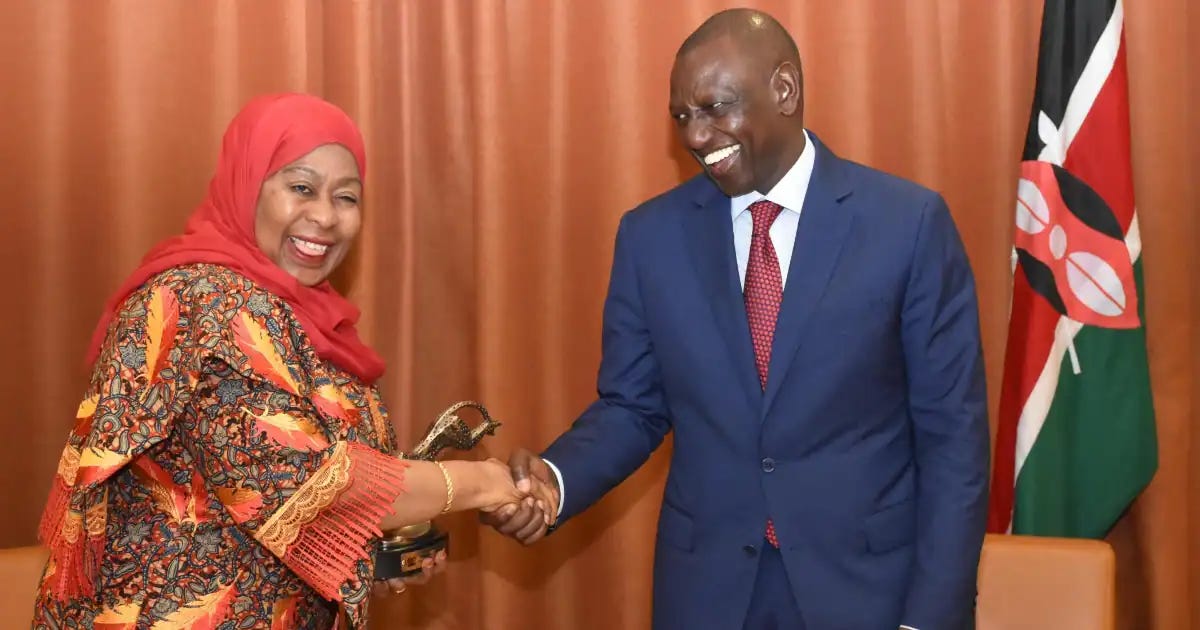
Honestly, I cannot give a chronological account of what took place during these elections. Reason being: they were taking place in complete darkness from the media. Both the internet and airwaves were shut down allowing the government to completely control the flow of information. Whispers of widespread protests in the major cities trickled out, followed promptly by rumors of a massacre on the streets.
Yesterday i finally came across an IG post by Boniface Mwangi showing just a fraction of what transpired in Tanzania. On the streets of Arusha, Dar and Mwanza, bodies littered the pavements. Blood on the tarmac, on the soil. Bullets through heads and torsos. The injured crawling through the streets trying to access medical care. Bodies covered up with lesos and some heaped over each other. Some mothers still holding their children…
A bloodbath.
Tanzania’s electoral body declared Samia Suluhu as the winner with over 97% votes cast in her favor. Shamelessly, she was sworn in a ceremony attended by the cream of the government as well as heads of state and deputies from neighboring countries. We had our very own Kithure Kindiki in attendance. She initially dodged all talk of the events that took place during the elections in her address instead choosing to focus on thanking the electorate for choosing her.
Eventually though, she acknowledged the election observers who oversaw the voting. She quoted the inaugural speech one of the earlier presidents of Tanzania, Benjamin Mkapa ,stating that while she accepts criticism from observers about how the elections went down ‘maagizo ya kutuelekeza nini cha kufanya tumeyakataa’. Basically, she said, you can take whatever advice you have and shove it.
Further, in a text message sent to the 32 million Tanzanians who allegedly voted for Suluhu, the dissemination of images and videos of the bloodshed that took place has been vehemently warned against. Those caught doing it will face serious consequences.
There’s one last thing I must address. Consistent throughout all these atrocities, is the silence and complacency of regional bodies like the African Union and the East African Community. I understand the policy of non-interference, but to send congratulatory messages to a president who just massacred her citizens to stay in power… come on. I would expect such from the likes of Ruto and Hemedti who are birds of the same murderous feather as Suluhu, but the African Union??
It is clear as day what these regional groups stand for. It is as if they exist to whitewash the sins of the incumbent rulers of the member countries. In the Sudan conflict for instance, the AU has appointed none other than Yoweri Museveni to serve as mediator.
What does Museveni know about democracy?????
This in itself just shows the blatant neglect of Sudan’s affairs. This can’t be the same organization we expect to hold our leaders accountable. Their activities are commensurate with those being undertaken by the leaders of the member countries. As East Africans, we have no option than to realize that no one is coming to save us.
If you enjoyed or learnt something from this piece please consider subscribing and pledging an amount. I also accept direct donations through this link.
It’s tragic that throughout history, meaningful change has so often been built on bloodshed and the graves of countless people. Since time immemorial, every major shift in power seems to demand a painful sacrifice. It’s as though, for society to be reborn, something — or someone — must first be lost. A heartbreaking truth. I long for a time where history will show shifts in a peaceful manner without the stench of unjust death.
I don't even know what to say. Praying Africa is freed from the shackles of bad leaders.