
Raila Odinga's Legacy
Immortalized hero or political sellout?

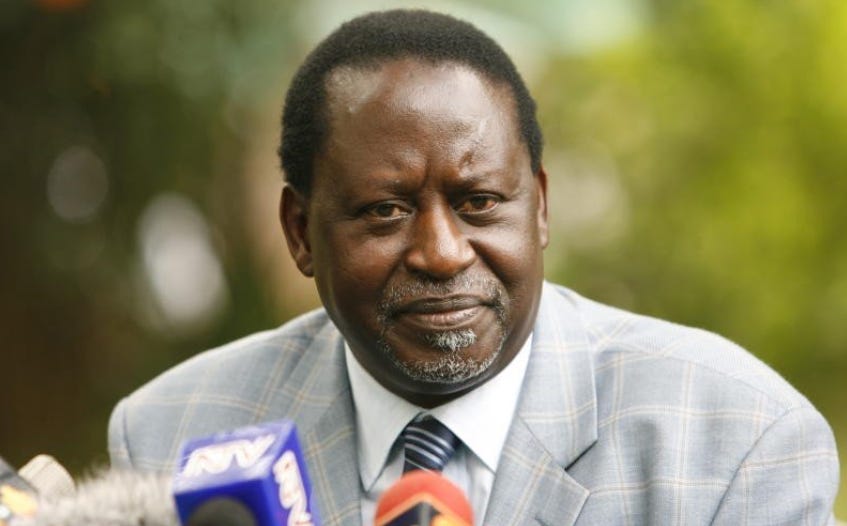
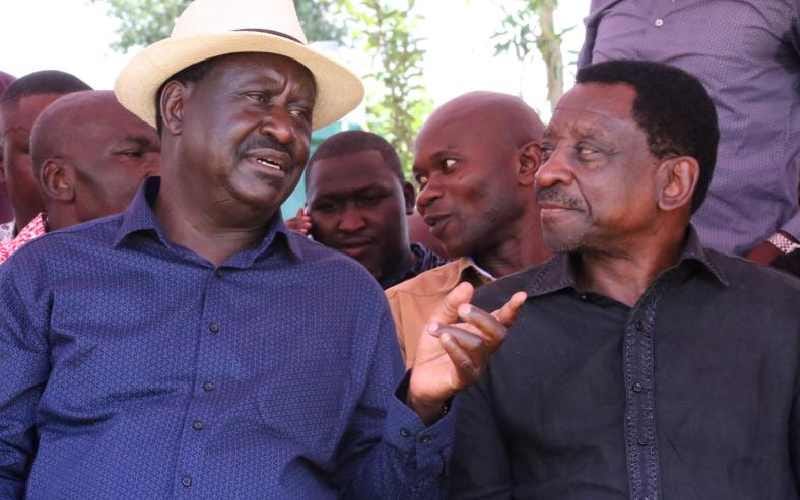
Raila Amolo Odinga is a household name in Kenya’s politics. The son of the first vice president, got into politics quite early in his life. During the Moi regime in particular, Raila distinguished himself as a selfless leader. He stood steadfast in the post-coup years demanding for democracy. In liaison with the likes of Kenneth Matiba and his life-long friend James Orengo, he was one of the main individuals behind the Sabasaba revolution.
For his efforts, he languished in the infamous Nyayo torture chambers. The horrors that took place within are still yet to be fully uncovered by Historians. On a personal level, during his time in the Nyayo House basement, Raila missed the news of his mother’s passing and consequently did not attend the burial. Such were the selfless sacrifices he made for the return of multiparty democracy.
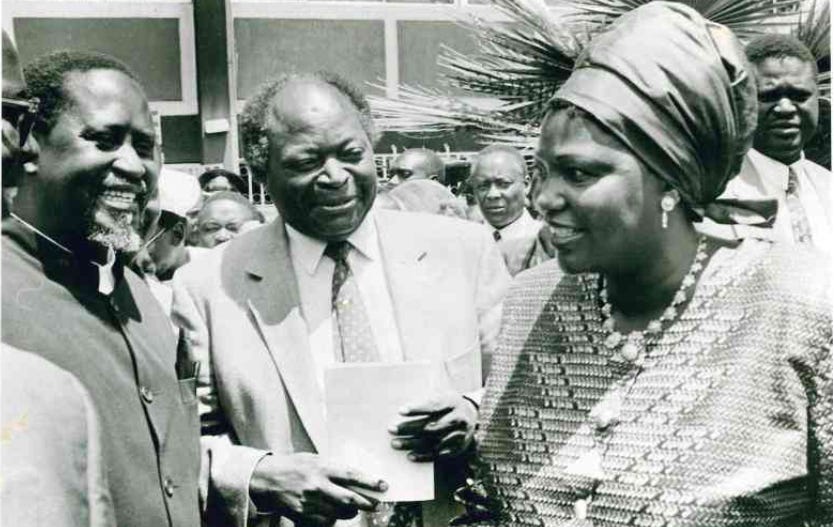
As Moi’s rule waned, Raila Odinga took his place in the new leadership of the country. His party was one of the many under the National Rainbow Coalition that finally defeated KANU in 2002. Although the regime started of well, wrangles in the ruling party caused it to splinter; a trend that has defined multiparty politics in Kenya to this day. After a failed referendum push in 2005, there was a falling out in NARC that caused the birth of new parties like Mwai Kibaki’s Party of National Unity and Raila’s Orange Democratic Movement. They geared up and ran campaigns for the most high stakes elections yet.
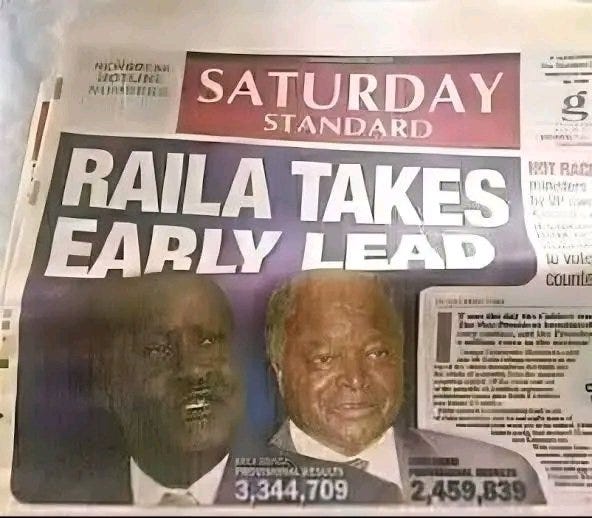
The 2007 elections quickly devolved into the 2007-2008 Post Election Violence- a dark, ugly chapter in Kenya’s history. As the early election tallies coming from BOMAS swung in Raila’s favour, his supporters prepared for a triumph. The incumbent Kibaki however, had other plans. The final election results had him as the overall winner and he swore himself back to power in a shady evening ceremony. As you all recall, the nation plunged into violence.
Raila Odinga’s leadership on the Luo community, revealed and reasserted itself in the chaos immediately following the announcements of results. From Kisumu to Majengo, neighbor clashes neighbors and police became the norm. William Ruto and other Kalenjin tribes loyal to Raila at the time were added to the fray. Kikuyus who had lived in an area of Eldoret named Kiambaa were massacred in a church (read about it here). This attracted retaliatory attacks from the Kikuyu in places like Naivasha. The country was in flames.
Dialogue was really the only way out for Kenya, the course of which I’ve discussed at great lengths in this WordPress article titled Coalition Culture. Though he was against it at first, Raila agreed to form a coalition government with Kibaki. He became Kenya’s second Prime Minister in the largest executive ever built. Some saw it felt like he was shortchanged for an election he had rightfully won, Obama called it ‘prioritizing peace over power’. Kibaki concluded his second term setting the stage for yet another political showdown.
Raila cried foul when the Uhuruto-led Jubilee coalition beat his Coalition for Reforms and Democracy. He led his followers in protest. Though met with violent suppression from the police and media censorship, the protests marked Raila as the symbol of defiance in the Kenyan political scene. He settled into his role as the opposition leader. A role he played with class and intelligence calling the leadership out on every little thing they did. I romanticize this period of Raila’s life. I honestly do not think we have had as good as an opposition since.
A successive highly controversial election was held in 2017. Raila’s Octagonal coalition NASA faced off against Jubilee. This time however, there were blatant irregularities in the voting and tallying process. Raila successfully petitioned against Uhuru Kenyatta’s win. In an unprecedented ruling, the elections were nullified- an ode to Chief Justice Maraga’s brevity.
Rather than double-down on the ruling and court victory in the by-election, Raila Odinga boycotted it altogether. As Uhuru Kenyatta was sworn in November 2017, Raila put a nefarious plan together. Realizing that the electoral bodies would never deliver him victory in the polls, Raila swore himself in at a controversial event in 2018. The reasoning was, article one of the constitution allows Kenyans to exercise their powers directly.
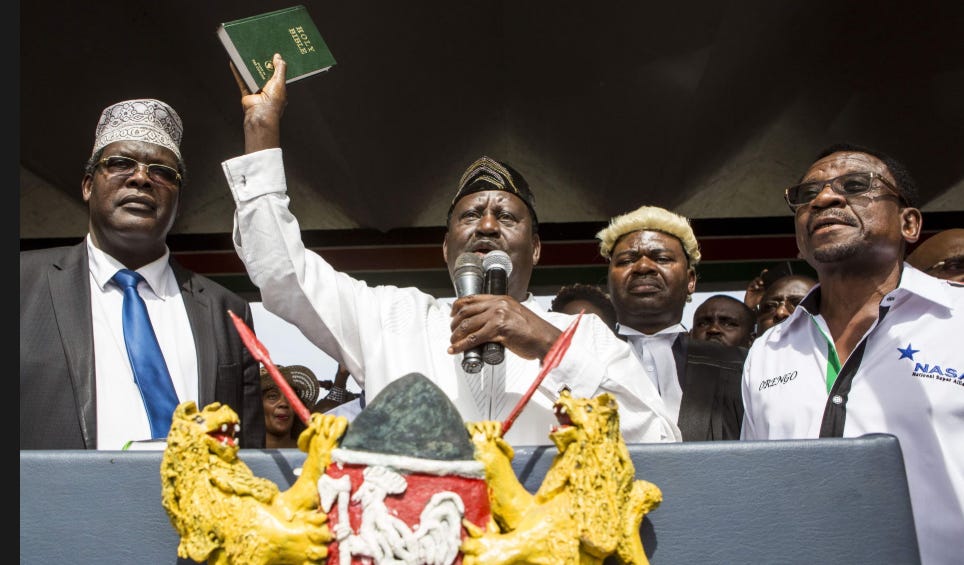
The faux ceremony had no real legal standing and things reverted to normalcy eventually. Uhuru Kenyatta was serving his last constitutional term. His greed for power, caused him to extend an olive branch to his political opponent guised as a move made for the sake of peace. ‘The Handshake’ elicited different reactions from Raila’s supporters. It was unimaginable that just a few months prior the same men were denouncing each other in public using unprintable terms.
The real reason for this would soon present itself. The Handshake birthed the Building Bridges Initiative (BBI). In one of the hilarious quips he was known for, Raila stated ‘no one can stop reggae’. The BBI proposed the creation of new positions that would act as soft landings for politicians who used up their constitutional tenures. At its very core, the initiative marked the end of the Jubilee coalition and the start of a new Uhuru - Raila coalition. This was evident from William Ruto’s body language during the BBI launch. Indeed, Ruto read the writings on the wall and quietly excused himself to form a political party.
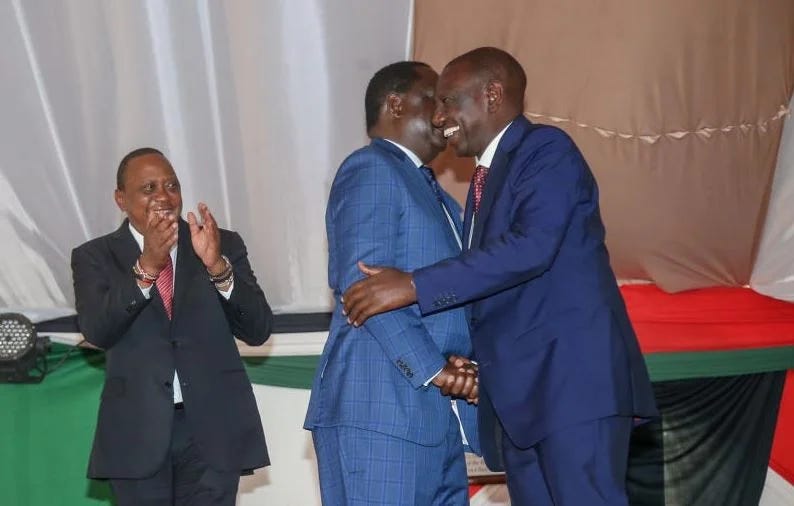
Raila’s gambit would prove to be his undoing in the last election of his life. Not only was the Building Bridges Initiative killed in the courts, his Uhuru-backed coalition lost against William Ruto. The campaign trail, opinion polls and chest beating had made all of this seem like an impossible eventuality and yet… Many of Raila’s allies quickly jumped ship and swore loyalty to William Ruto in despair.
Gradually, Raila’s role in Kenyan governance achieved an almost vestigial nature, but the fire of protest he had midwifed would spark yet another wave in the Ruto regime. The 2024 Finance Bill provoked widespread protests in the country due to several extortive bills written into it. The Kenyan youth, in the absence of leaders, sponsors or organizers, took to the streets.
Raila received his flowers during the very start of these protests. This direct pursuit of justice had Raila’s watermark all over it; and yet he did not feature in the protest itself. A touching tribute shared on social media, featured one of the protestors thanking Raila for his firebrand spirit of protest. Further, she asked him not to bother coming out. Henceforth, the youth would take the fight up for themselves.
At this point, Agwambo’s legacy was safe and secured; immortalized even. With the direct democratic intervention of the youth, Raila had been distinguished as the peoples’ champion albeit in a purely influential capacity. He only had to stay home and urge the protests on passively but he took a different route.
The protests turned bloody; first with the murder of Rex Maasai then many more individuals as the government struggled to suppress and undermine the protests. Although the finance bill was eventually halted, Raila saw an opportunity. Rather than leverage on the blood that was spilt to pressure the government, he used it as a stepping stone to advance his 50+ year career. For all his ‘political shrewdness’ Ruto sensed that a coalition with Raila’s camp would help him consolidate his power against the wave of Gen-Z protests.
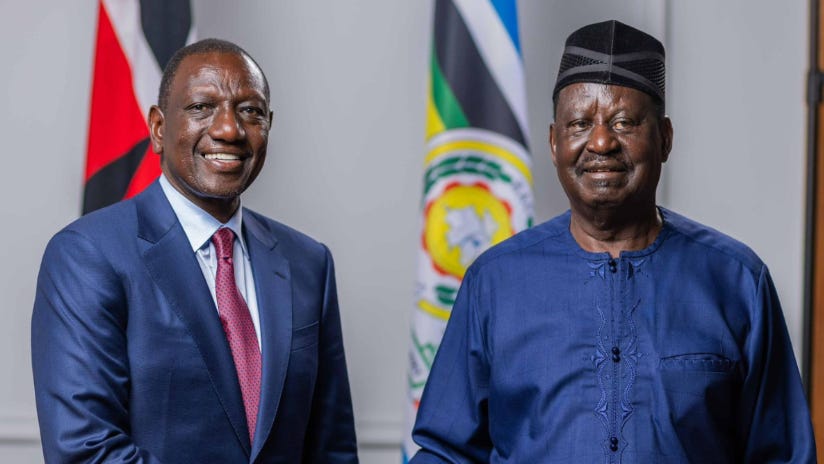
This represented a banding together of the political class, betraying the revelation of where Raila’s priorities stood altogether. Indeed, yet another coalition was struck between Raila Odinga and none other than William Samoei fucking Ruto. Analysts note that in this coalition, Raila enjoyed more power than the previous deals he had negotiated. Although he said he met Ruto at Uhuru’s urging, he did not deign to benefit from the positive aspects of this deal. Some of his henchmen were fit into the cabinet including Ali Hassan Joho and Raila seemed to have direct access to the presidency at the cost of the then deputy president Rigathi Gachagua.
The sickest thing about this deal was, Raila still maintained an act of aloofness. He still masqueraded as the opposition leader. When Ruto would do something that would rub the people the wrong way (he does this a lot), Raila would host press conferences denouncing Ruto in measured tones and pre-written speeches. Unfortunately the act was not fooling anyone. Raila had effectively soiled his legacy altogether, and for what?
As police abducted Kenyan youths who dared to stick it to the government in whatever way, shape or form, Raila was complicit. As Kenyans were murdered in the streets for protesting, he turned a blind eye. As the common mwananchi starved and grumbled about the rising cost of living, Raila proposed the so-called Broad Based Government as a solution. All of these implicate him directly into the crimes of the Ruto regime and it is the reason I’m finding it hard to mourn this man.
The effect of this betrayal was such that his magic of influence in regards to protest wore off. As the youth took to the streets for the anniversary of the Finance Bill Protests, no touching tributes were sent his way. By this time, he was nestled safely in the bosom of the most corrupt regime yet.
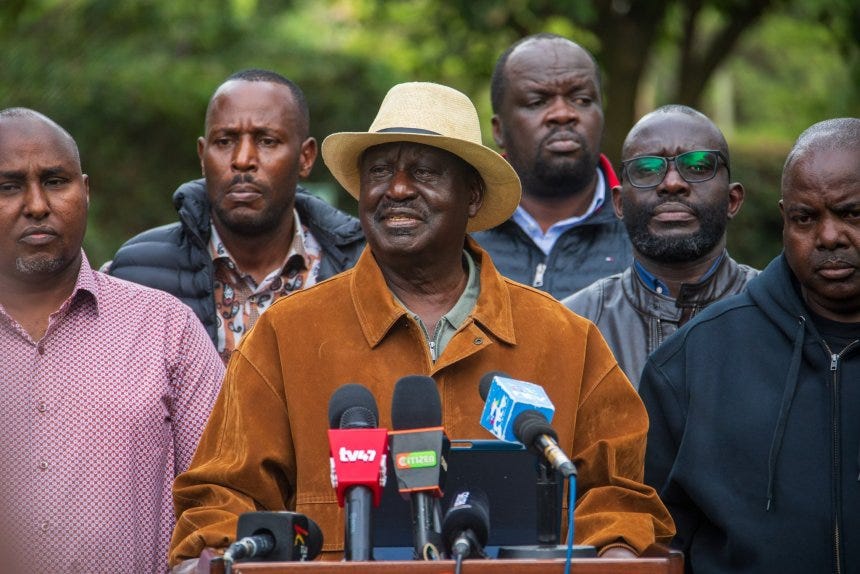
The final blow came during the Sabasaba protests in 2025. They meant to mark the 35 anniversary of the protest that resulted in the multiparty democracy. The same cause that had permanently etched Raila’s name into the historical tapestry in the country. As protests raged on across the country, an opportunity for the citizens to express their frustration with the incumbent government, I watched with disgust as Raila provided a deliberate unnecessary sideshow.
A press conference given in a Nairobi hotel bordered by his political allies including the likes of Junet Mohammed was broadcast live for all to see. This speech featured an unnecessary account of the events that took place decades ago. This media coup from the supposed opposition leader offered no critique to Ruto’s government. Not until a journalist asked about the country’s gradual slide into police-state status in reference to the violence with which the police put down protests. This was violence he had not only witnessed but experienced first-hand
Raila stated that he had conversed with the president at length about the matter but rather than hold him accountable, he stated that this issue had started from the colonial days and would be difficult to expunge.
Yes, Raila was on there making excuses for the Ruto regime. He would denounce him yet, Ruto’s number lounged comfortably in his phonebook while Kenyans from all walks of life suffered.
Well, Raila passed away while undergoing treatment in India on 15 October 2025. The news was received with mixed reactions from the public. Jomo Kenyatta International Airport was invaded as his body jetted back in the country. Followed by a body viewing fiasco at Kasarani stadium that made it plain as day that he must have won at least one of the elections he contested. It also left two people dead as police fired shots to disperse ‘unorderly mourners’.
As the nation mourns this political leader, the question of his legacy remains. Some will remember him as a stalwart leader who upheld democracy to the last day. For others, the compromises he made for power will forever taint his memory.
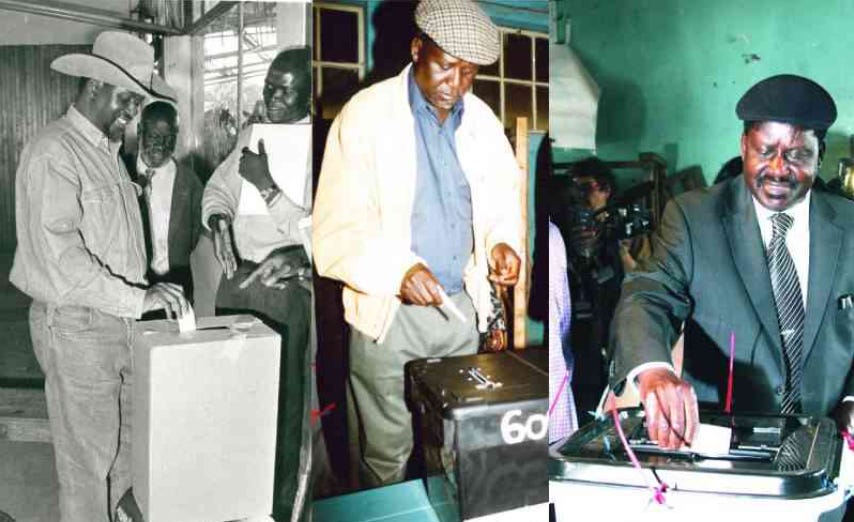
I grew up hearing of Raila as this brave leader who fought for Kenya, even read about it in school. So when I was old enough to form my own political opinions (the 2017 elections), I didn't see it, but I decided to give him time. Maybe I didn't understand politics. Then the handshake with Uhuru happened, he said it was for peace, for those who lost their lives and a pact to ensure no more lives were lost.
With the handshake came the BBI, and it was at this time that doctors were striking because they lacked PPEs (it was during covid). There was no money for the doctors, but there was money for BBI. At that point I knew the Raila I learned about in school was not the Raila I was experiencing. He had lived a long life in politics, lived long enough to be that which he fought against. The Gen Z protests made me detest him, for someone who claimed to be pro-people he had a hilarious way of showing it.
I acknowledge that he fought for Kenya, was tortured for Kenya. We have a lot of rights and freedoms because of him. The political landscape has lost a lot. But he became just like the rest of them, a man guided by greed. He was unrecognisable, his reputation/legacy tainted.
Kenyans are very funny. They will hate a leader but when he dies he is automatically a hero "De mortuis nil nisi bonum" - of the dead speak nothing but good which is bs to me. Yes he fought for this country but he was also the man who burnt everything he fought for. We cannot discredit what he did and we also can't live in the past constantly. He changed and he isn't the leader we once knew.