
Women in Maumau
The unsung heroes of the independence struggle.

The deadly, abrupt Maumau war wrecked untold pain, suffering and death on the people of Central Kenya. The independence attained as a result was earned in blood as the Kikuyu, Embu and Meru tribes fought guerrilla skirmishes from the Aberdare and Mt. Kenya forests. In the words of Ian Henderson, the Assistant Superintendent of police who hunted Dedan Kimathi to the edge of the woods, ‘It was a peculiar war’.
Women, who traditionally stayed away from armed conflict now faced the reality of war either directly or indirectly. From the onset, they did not shy away from it. To say that women were the driving force of the Maumau war would be an accurate statement- and I’ll show you why.
Agitation
The seeds of the Maumau war were planted on the Mau Escarpment. After years of a deliberate onslaught on the welfare of mostly Kikuyu squatters in the Rift Valley, a pattern of dissent started to show itself. This fire of protest was harnessed in the crucible that was the Olenguruone Settlement Scheme (1942) . Professor Tabitha Kanogo in Squatters and the Roots of the Maumau, notes that women were front and center in the defiance shown to the colonial government.
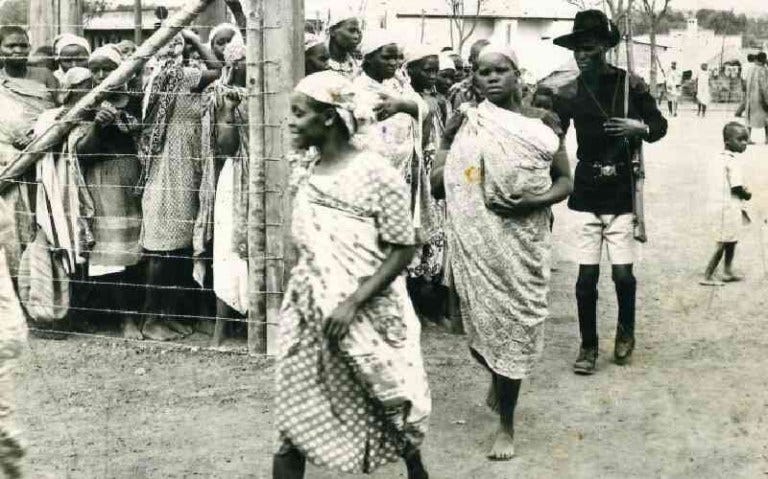
As discussed in the article titled The Olenguruone Crisis, communal work reserved for women like gabion building and ridge terracing was wholly boycotted. So effective was the protest that development of Olenguruone was halted altogether. It necessitated importing labour from as far away as Kisii to put things back on track. `
Either way, Olenguruone inevitably deteriorated into a disaster but it was not all a loss. An oath of unity was sworn by the families present in Olenguruone, under the patronage of Senior Chief Koinange and the inner cell of the Kikuyu Central Association. Oaths were nothing new to the Kikuyu as we saw in Tenets of Kikuyu Witchcraft. What was special about this oath however was that it was administered to women as well. This was unheard of in Kikuyu tradition.
As evictions began in 1950, Olenguruone residents were filled into lorries and evicted from the settlement back to the reserves or to the arid Yatta Plateau. In the lorries, the women sang the songs of protest that were composed in Olenguruone. These songs would be the vehicle of political radicalization. This is the Maumau ‘contamination’ the colonial government would try to eradicate by detaining any suspicious member of the Central tribes. They alighted in places like Lari and Muguga or found their way to their relatives in Murang’a. All these would soon be battlefields and as a result of the indiscriminate administration of the oath, everyone had a part to play. When the time came, they were ready.
The Passive Wing
While studying the Maumau war, the instinct is to focus on the guerilla battles in the forest or the various massacres that took place. It is easy to overlook the non-militant members of the movement, most of whom were women. Maumau Chronicles on Youtube is a treasure chest containing interviews with several veterans who served in this unarmed passive wing.
This vital detachment allowed a continuous flow of supplies, information and munitions in and out of the forest. The women in the reserves would discreetly prepare meals for the fighters in the forest. The food would either be collected by the insurgents in the dead of night or would be left at a pre-arranged location. Careful measures would have to be taken to ensure no incriminating footprints were left behind.
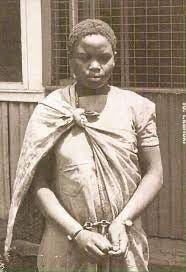
Children (girls in particular) were also vital in the delivery of messages. In Maumau General, Waruhiu Itote explains the elaborate mailing system used by the insurgents both in the forest as well as through their urban strongholds. During the infamous Operation Wedgewood, Waruhiu Itote used girls to deliver messages to Maumau leaders in the forest for negotiations. Although the negotiations broke down, a steady stream of information moved through the warzone and the reserve.
The women were also a vital source of firearms and ammunition- two very important resources whose scarcity put the Maumau in a desperate disadvantage. But yet again, the dauntlessness of women showed itself as they snatched arms from the colonial forces. Waruhiu Itote (General China) narrates such instances in his book:
Our girls were quite skillful in obtaining weapons, and four of them relieved a KAR soldier of a bren gun at Embu one day. After a Government ‘swoop’ in the area the soldiers were returning to camp. One of them was attracted to a pretty girl along the way and dropped out to chat with her; three of her girl-friends stayed discreetly in the background. Flattered by her interest and by her lively response, the soldier forgot the circumstances and suggested they leave the roadside for a more secluded spot. The girl agreed, to his obvious delight, and led him into a banana grove where she threw herself on to the ground. The soldier’s good fortune lasted only a moment longer, however, for as he joined her in an embrace the three girl-friends grabbed him from behind and quickly tied his arms and legs, while the original temptress dashed off with his bren gun. They left him helpless, and undoubtedly furious and frustrated, knowing he had sold his weapon for mere play.
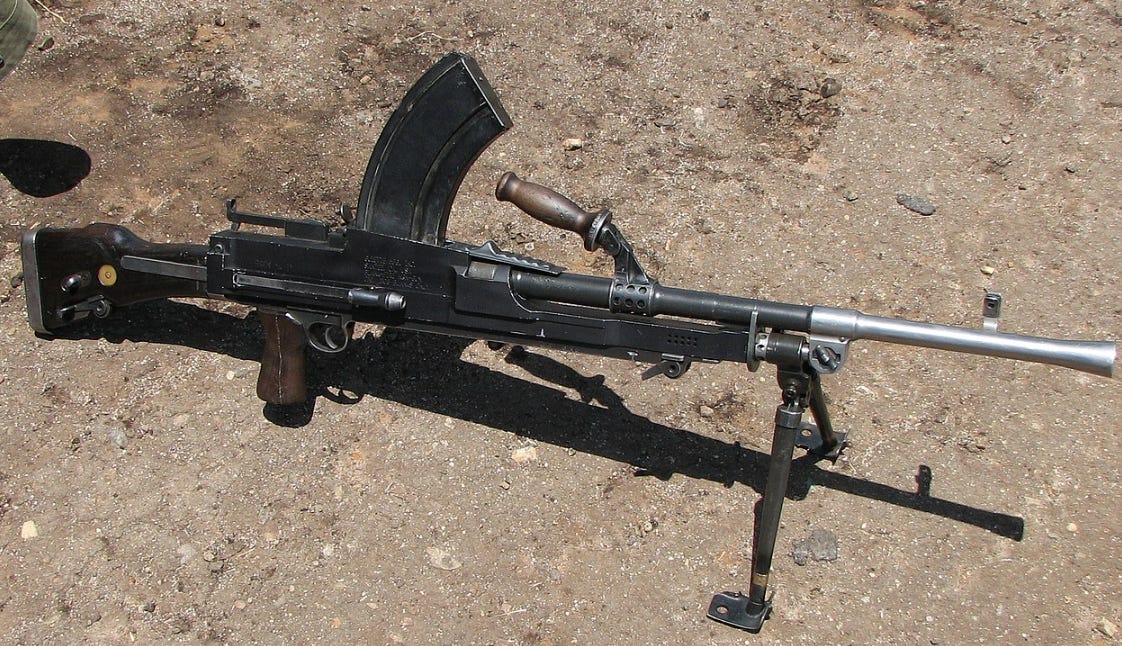
Some of our girls prepared a huge feast for the police soldiers near Nanyuki, at the Uaso Nyiro river. Good food and strong beer were abundant, and the men quickly relaxed both their security measures and their self-discipline. The girls were charming as they flirted and laughed round the fire, and the men left their rifles to dance, and, hopefully, to lead the girls away. Not all the girls were so pleasant, however, and several of them quietly collected the briefly abandoned weapons and handed them over to some of our young men, who were hiding in the bushes. Of course when the theft was discovered the party came to an abrupt end, and the soldiers lost not only their pleasure but their revenge, for they could not dare report the incident as it happened. I am sure they thought up another story, and never trusted a woman again for the remainder of the fight!
Fighters in the Forest
There was no ceiling to the bravery on display in the Maumau war. While most of the women were confined to the reserves, there were women in the forest as well. They fought alongside the men as equals and some of them even ascended to respectable ranks as we shall soon see. Typically, a girl would start off as a messenger or food porter for the soldiers in the forest. Incase she was compromised she had no option but to retreat into the forest.
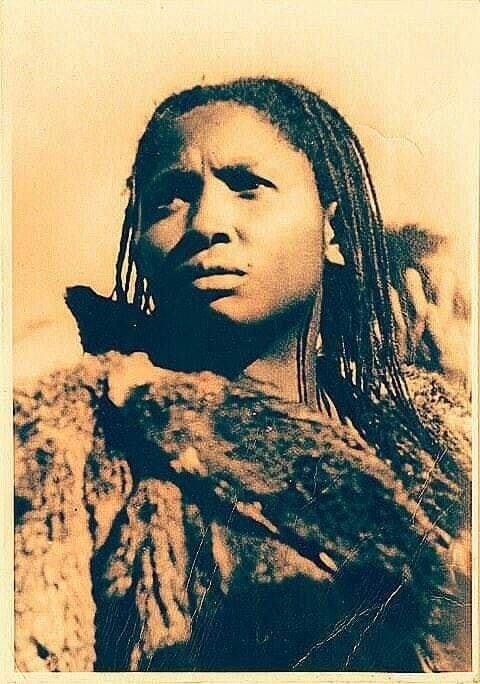
This is how Muthoni Kirima found herself in the forest. She started off as a spy for Dedan Kimathi in Nyeri. She would collect tidbits of information for him on the movements of colonial troops and pass them on. Eventually though, her cover was blown. Homeguards beat her up and left her for dead. Women from her village nursed her back to health in discreet. When she got better, she did not risk going back home. She found her way into the forest and joined up with other fighters.
She served under Karari Njama, distinguishing herself with her diligence, loyalty and fierce fighting. Muthoni Kirima rose the ranks eventually being promoted to Field Marshall, alongside Kimathi in a ceremony presided over by two elders from Murang’a as recorded in Maumau From Within. She also had close ties with General Stanley Mathenge. She saw combat all over the Nyandarua Ranges and was one of the last fighters to leave the forest. This indomitable woman kept her dreadlocks until very recently, in protest of Kenyatta’s betrayal of the Maumau- a story for another day. She donated the locks to the Museums of Kenya.
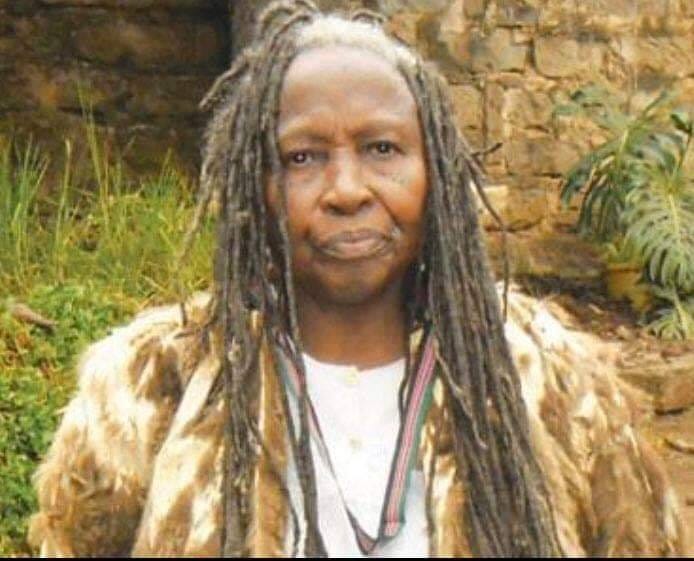
There was also Martha Mukima, a young girl at the time who joined the fighters in the Nyambene Forest in Meru. She served under General Mwariama. In her interview with Maumau Chronicles, she recalls being his assistant. She would groom his hair and send his personal messages. Martha also ventured into the reserves to get food for the fighters. All while persevering great suffering.
Grace Njoki Mwangi, known in the forest as Kanguniu was a young girl when the war broke out. She was a resourceful scout and guide leading the soldiers through forest paths she knew. Kanguniu is the unsung heroine of the Battle of the Black River (Mbara ya Rui Ruiru), one of the fiercest episodes of fighting during the Maumau war. In Swords of Kirinyaga, Kahiga Wachanga records the events of this battle fought between the forces of Generals China Kariba and Tanganyika against a harsh British offensive.
Nestled on the lower slopes of Mt. Kenya, the government forces were about to surround the Maumau batallions, pin them down and rain artillery on them. Kanguniu warned General China of this plan while he was on Tumutumu hill alerting them of the risk. She exchanged clothes with a fighter named Baranja who, disguised as a woman descended the hill to spy on the forces delivering back a comprehensive report of the offensive.
Armed with this information, General China’s battalion advanced from their position in three batches under heavy fire. They ran into ambush after ambush as the colonial forces tried to surround them but each time Kanguniu showed them a way through. Having been flanked from crossing the main Karatina- Nyeri road, the girl led them into the forest through a place called Nguniu but not before winning a contested crossing of the Thagati River. It is here that the fighters gave her the name Kanguniu for delivering them from total destruction.
The Maumau lost 21 men that day while the government forces lost 61.
Most Vulnerable
As the war stretched on, untold suffering was meted on the Africans. Women bore the brunt of these horrors. This was in full display when the government instituted an intricate incarceration system aimed at ‘cleansing’ the masses of Maumau contamination. As majority of the men were shipped away to various detention camps, women were left vulnerable in the villages. Home guards and security forces preyed on the vulnerability of this demographic. Cases of sexual violence were rampant.
Women who were accused of Maumau sympathies or caught in war or serving in the Maumau passive wing were arrested. After a gruesome interrogation, they were taken to the one detention camp that was reserved for them- present day Kamiti Maximum Prison.
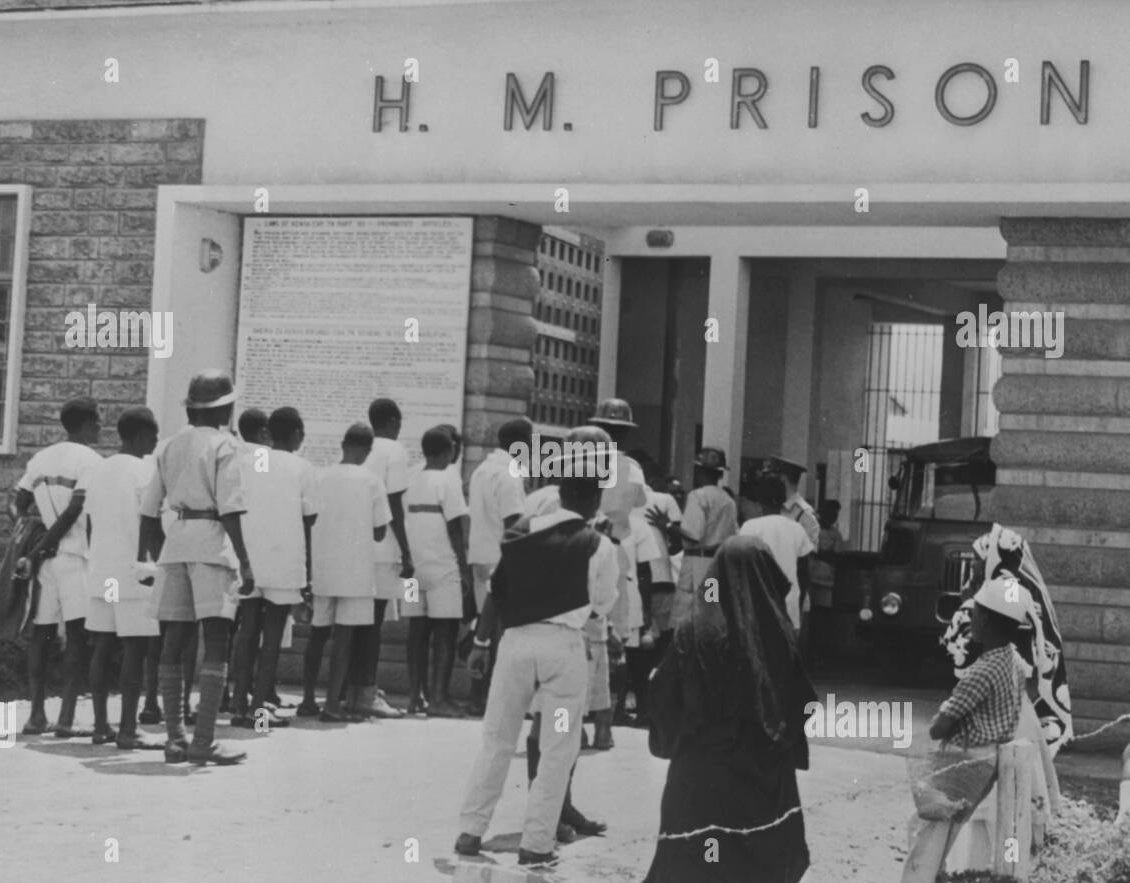
The women in Kamiti were presided over by Katherine Warren Gash, the Kikuyu speaking settler they had nicknamed Mahuru. Like Louis Leakey, she too prided herself in the knowledge of Kikuyu language and culture and insisted that they call her Gathoni. This woman was ruthless. From the dehumanizing intake program where the women were strip-searched and fingerprinted, they had a horrible time. The screening that followed was even worse as the detainees would come face to face with Mahuru.
Her screening tactics ranged from ordering beatings and ration reductions to threatening the lives of those children accompanying, as well as those born to, their mothers in the camp. The meals were meagre, consisting mostly of porridge and bean stew served in tin mugs which were the detainees’ most priced possession. Here they suffered malnutrition, poor sanitation and cold exposure.
The women were put hard at work on murram projects. As described in Britain’s Gulag:
Everyone worked at Kamiti. The camp had four different work details: digging and moving murram (hardened asphalt like earth), toilet bucket cleaning, cutting grass and tending the vegetable garden, and off-loading and burying dead bodies. Camp officials assigned the majority of detainees to the murram project, by all accounts grueling work. The warders marched the women out to the digging site, where they were divided up into a kind of assembly-line production. A third of the women were given mattocks for breaking up the hard encrusted soil, another third shovels to dig it out, and the remainder large metal basins that were filled with the murram. This last group was expected to carry the heavy loads on their heads, while running, in order to dump the murram at a site about a quarter of a mile away.
This grueling work would happen nonstop throughout the day with any attempts at rest being met by a thorough beating which were sometimes fatal. It was so draining that foul toilet bucket and delicate garden duties were highly coveted in Kamiti. In fact, these jobs were reserved for those least suspected of Maumau sympathies.
Some of the hardcore detainees under punishment were made to work in the burial gang. The male convicts would dig large wide holes both within and outside the prison compound. Truckloads of bodies would be brought to the camp, sometimes once or twice a day, other times every other day or every few days. It was the women’s work to fill the bodies into these holes. In this truly horrific affair, sometimes a woman would recognize someone as they were burying them but they would have to continue working or risk attracting the wrath of the wardens overseeing them. Many of the bodies were maimed, shot or visibly tortured.
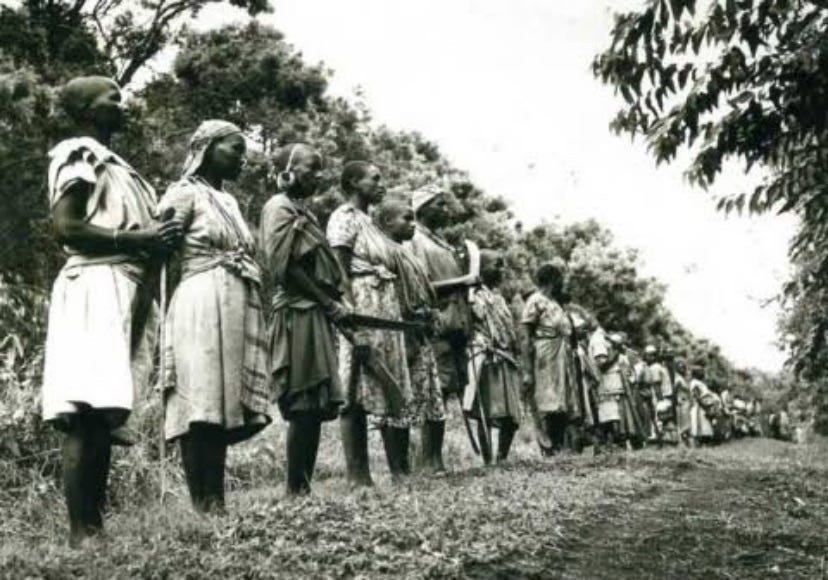
The indomitability of women in the Maumau war is undeniable and their effort in the struggle for independence is indelible.
Hinges of Time is a Kenyan history collective that is dedicated to teaching History the right way. You can support our mission by getting a paid subscription. This money not only funds research and motivates writing, it also earns you some subscriber privileges. Alternatively, you can donate directly from M-Pesa through this link.
The mũthĩrĩgũ songs were both morale booster as well as information broadcasting. Since kikuyu women usually sang as they worked, a certain sgt major nicknamed Gachomo demanded songs extolling his virtues. One sang by my mother’s gang had the refrain, “ sajini-meja Gachomo, gatũri ũngirokua”. The tough women survived the mzungu. I still have my father’s bathibuku:
I am loving your work, every bit of it👌
Good work